
Siyanbola Victor
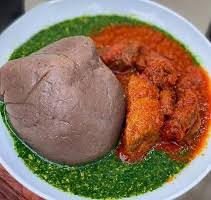
Nigeria is blessed, no doubt. In most (not all biko) ramifications, we can count our blessings and name them one by one using the language we speak in our ethnic group. Amidst this list of blessing, the traditional Nigerian cuisine is not left out. It contains a variety of native foods that are eaten by the different people of the six geo-political zones of the country. In the Yoruba land, there is a proverb that one’s palm does not deceive one – this is true as a solid food eaten with the hand (why would you use a cutlery, just why?) tastes so sweet. I choose to explore my close relationship with my Amala and the journey so far. Please, do well to join me on this journey with a destination.
Amala, my source of strength, is a food common about the Yoruba people of the Western part of Nigeria. It is the end result of a yam, banana or cassava (the white Amala) that has been dried, ground and on the day of judgement, turned by agile bodies (excluding me). Yes, the turning process! Though I love eating Amala, I am unable to prepare it myself. I don’t think I have the necessary muscles to turn it round like a clock in my cooking pot. However, one thing is certain: I am imbued with the necessary muscles, strength, energy, veins for the tapping process (when you hit the top of the Amala with your palm); slicing process (I use all my fingers, I don’t know about you); transitory process (the distance between a Morsel’s life and death – less than a second); the chewing process (I’ve yet to confirm if this is necessary!) and the swallowing process (last and least).
The solid food is eaten by sunday people and often by sedentary workers who work with a lot of their energy and need something fit for its replacement. Believe me you, Amala does a perfect job in this aspect. It contains glucose (don’t say sugar, please). Glucose in the human body is controlled by hormones and its level of consumption affects the health either positively or negatively. On the one hand, the high intake of glucose poses a risk to the health as the person is liable to diabetes and obesity. Diabetes is a defect in the body in which the insulin that controls the circulation of blood is damaged while obesity is simply having excessive weight. If consumed on the minimal level, you may have both of the above defects kept behind bars.
I am so happy when they say unto me that my Amala is ready for consumption. All my body parts speak of its presence. Oh, yes! When it is accompanied by ewedu soup (not the blended one), gbegiri, and the chief of them all, local bush meat, it’s a soothing channel to quench my hunger.
Sadly enough, with the aggressive coming of the hike in the price of things, came a twist of fate. The increase in foreign exchange, the hike in the prices of things, the present economic situation of Nigeria have all connived together in one or the other against me. They took my Amala away and replaced it with groceries; the righteous judge will surely judge among us all! They took my Davidic Amala away and replaced it with a food that has been defeated by the mouths of both the old and young. They took my Amala and left me with Garri. Here ends the sad tale everyone has hitherto experienced! So bad, so sad!

 NASELS Press University of Ibadan
Leave a reply to Anonymous Cancel reply