
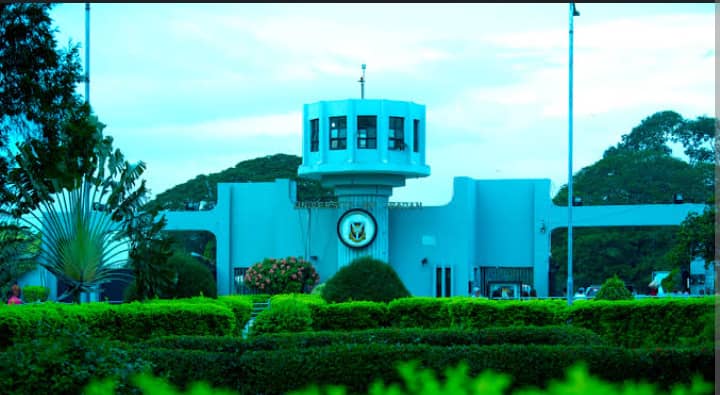
Federal universities in Nigeria were formally a life saver to poor parents and guardians who seek to get their children educated. It was a hope for the hopeless, which many of the first-generation children all benefited from. Majority of these groups hunt for the University of Ibadan among other universities owing to its track record of excellence and cost-effectiveness. Reverse is the case now as the institution is currently known for its exorbitant fees, up to 500% increment varying across departments and faculties. This led to the peaceful protest by three students who found it illogical to accept this oppression in silence. With this, there is a need to recall the event to be able to connect the dots.
In May 2024, three students of the University of Ibadan, held a peaceful demonstration on campus against a hike in school fees during the inauguration ceremony of the then newly sworn-in student executives, Aweda- Bolaji led administration. They raised concerns about the exorbitant fees, lifting placards with the inscription #Feesmustfall# to give a voice to the voiceless parents struggling in the country’s economic state. Instead of dialogue, the university reportedly invited security operatives to arrest the protesters, issued query letters to the student activists and later summoned the students to face the Student Disciplinary Committee (SDC) for ‘indecent conduct’.
Fast forward to June 2025, more than a year later, these students were again summoned. These attempts have drawn condemnations from human rights groups, journalists, and students who saw the need for reflections as the victimisation violates the UN Universal Declaration of Human Rights, Articles 19 which outlines Freedom of Expression: Everyone has the right to think and say what they like and no one should forbid it. Besides, there were obvious reasons for the peaceful protest.
There is a need to thoughtfully address different perspectives to this development.
What does it mean when a university which is a supposed space for critical thinking punishes students for peaceful protest? Basically, the university enhances its students with critical thinking to help them to make informed decisions in an analytic and rational way. By using critical thinking skills in education, students can enhance their ability to solve problems and make effective decisions. It should, however, be noted that this equipment is not limited to analysing and interpreting academic works alone but to making life decisions cautiously. Among this is students understanding their rights and the ability to express them. It is quite surprising how students are now disciplined for expressing dissatisfaction with the management policies in a “peaceful protest” as an exercise of their democratic right.
Another outlook to this development is the repeated use of SDC to intimidate the students. It has been over a year since the incident happened and the management has not resolved it. Despite many criticism from global human rights groups, including Amnesty International, The National Association of Nigerian Students (NANS), Global Human Rights, the Socio-Economic Rights and Accountability Project (SERAP), Activista Nigeria, and the Education Rights Campaign, the University still keeps victimising the students. Recently, the National Association of Nigerian Students (NANS) has strongly condemned the reported move by the University of Ibadan to expel the three students over the peaceful protest. This victimisation will only continue to affect the students physically and psychologically as they have to repeatedly appear before the panel.
Furthermore, the university has shifted its gaze from the reason for the protest to the students’ conduct. They did not address the affordability of the fees as the current session tuition fee is still on the increase. Many students opted for NELFUND while some others got their fees paid through petitioning for financial support by their halls of residence and departments. The continuity in this fee will sooner or later deprive the financially strained parents’ children of education in their country. Yet, the student activists who believe in affordable education are continually confronted with the disciplinary panel of the university.
One more viewpoint is the Student Union’s silence about the matter. The University of Ibadan’s Student Union seems to have forgotten they represent the interest of the students. They are expected to be at the frontier of the motion for affordable fees. Their utmost concern, at this stage, is to condemn the victimisation of the students under their unionism. However, the reverse is the case. Likewise, the student community has been following the same pattern as the Union. Everyone seems silent on the issue. Many are quick to point accusing fingers at the protesters, but they seem to forget that they, too, will continue to bear the burden of exorbitant fees if they remain silent.
At this point, there is a need for reflection and redirection. The university could not only drop all charges against the students, but rather make possible amendments to the tuition as this will afford everyone the opportunity to have education without breaking the bank. In the same vein, the Student Union should make it their responsibility to protect and serve the interest of the students they represent. They should embrace the spirit of unionism as this is their purpose in the space they are occupying. Moreover, the student community must stand in solidarity with their peers in the fight for affordable fees, as this issue affects everyone.
 NASELS Press University of Ibadan
Leave a comment