
Faculty of Arts, UI
Zenas Olanipekun
Poetry is one of the genres of literature which has some special characteristics that makes it different from other genres of literature. Poetry is structured from one or more stanzas that each stanza consists of one or more lines. Each line is arranged by specially chosen words. Therefore poetry is a combination of beautiful words that brings special messages. Poems are written in elevated language.
Here are some definitions of poetry according to different scholars. To Thomas Hardy, “Poetry is emotion put in measure.” This proves the fact that literature responds to human experiences such as fear, love, hope, greed, war etc. William Hazlitt has a different perspective to Poetry and states that, “poetry is the language of imagination and passions.” According to William Wordsworth, “Poetry is the spontaneous outflow of powerful feelings: it takes its origins from emotion recollected in tranquillity.” To wrap the definitions up, Dylan Thomas examined poetry from the perspective of its importance. He states,”A good poem is a contribution to reality. The world is never the same once a good poem has been added to it. A good poem helps to change the shape of the universe, helps to extend everyone’s knowledge of himself and the world around him.”
The historical development of English literature is categorised into various periods and movements. Romanticism in poetry can be defined as the development of individualism and an embrace of the natural world in poetic form. Romantic poetry is poetry written during the Romantic era which began roughly around 1798-1837. It is not necessarily connected to romantic love. Instead, the Romantics were interested in the human experience, transcendent mental states, and intense emotions. Romantic poetry is characterized by everyday language, explorations of mortality, high levels of emotion, and themes of revolution and liberation.
Many Romantic poets revered idealism, emotional passion, and mysticism in their works. Furthermore, a large emphasis was placed on the imagination, which was in response to the neoclassical tradition, a movement that favoured science and reason. English poets such as William Wordsworth, Samuel Taylor Coleridge, John Keats, Percy Bysshe Shelley, William Blake, and Lord Byron produced work that expressed spontaneous feelings, found parallels to their own emotional lives in the natural world, and celebrated creativity rather than logic.
In Romantic Poems, the theme of individualism sometimes runs through the poem. This is seen in William Blake’s “The Schoolboy.” Blake makes use of some interesting and important themes in ‘The Schoolboy’. He explores childhood and youth, as well as themes of education, nature, and freedom in this piece. His main character and speaker, the schoolboy, spends the poem describing the difference between freedom in the natural world and the cruel restrictions of formal education.
He believes that he will be better off learning what he needs to know of the world from nature rather than from someone’s idea of what’s good for him. The poem brings up questions about the effectiveness of standard education and what the right way to raise a child is. Additionally, Blake celebrates youth, and youth tied to nature, as he commonly does within his poems.
I love to rise in a summer morn, When the birds sing on every tree; The distant huntsman winds his horn, And the skylark sings with me: O what sweet company! But to go to school in a summer morn, – O it drives all joy away! Under a cruel eye outworn, The little ones spend the day In sighing and dismay
They also wanted to focus on emotions and feelings more than anything else. This can be seen as a response to the cold science and industrialization thing that was sweeping the country. Enlightenment writers, again, were focused on science, fact and reason. The Romantics really wanted to focus on how people felt. Considered one of the most significant examples of Romantic poetry, “I Wandered Lonely as a Cloud” explores the relationship between nature and humanity. In doing so, it makes two key points. Firstly, it argues that humanity is not separate from nature, but rather part of it. And secondly, it suggests that the natural world and a strong bond with it, is essential to human happiness. Though the reader might be fooled by the suggestion of solitude in the title, this is an optimistic poem with a positive outlook on the world. This happiness is drawn from the speaker’s interaction with nature, in turn encouraging the reader to appreciate the natural majesty that is all around them.
The waves beside them danced; but they Out-did the sparkling waves in glee: A poet could not but be gay, In such a jocund company: I gazed—and gazed—but little thought ; What wealth the show to me had brought:
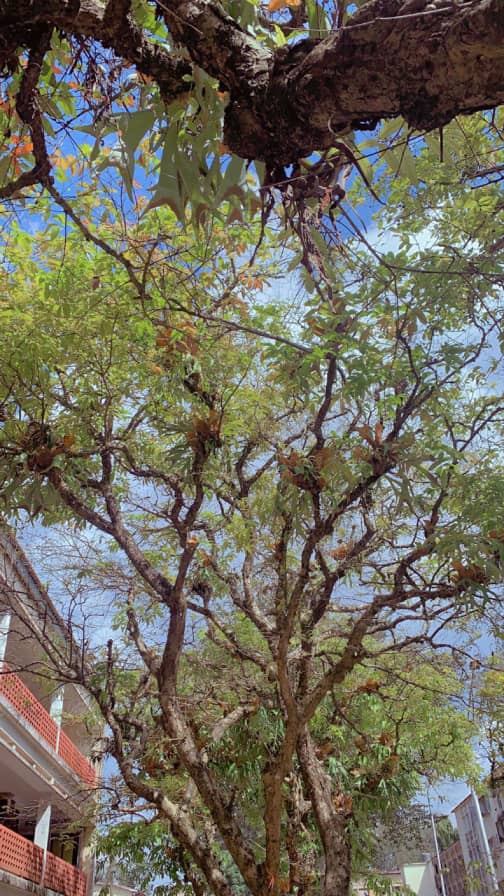
Like any good revolutionaries, the Romantic poets had a real love of nature. Celebrating nature was really central to a lot of their most significant works. Again, it’s a reaction to the Enlightenment, because the natural world had been dissected and clinically examined by scientists. The Romantic poets wanted to get back to just appreciating it and seeing it in its whole.
I wander thro’ each charter’d street, Near where the charter’d Thames does flow. And mark in every face I meet Marks of weakness, marks of woe. In every cry of every Man, In every Infants cry of fear, In every voice: in every ban, The mind-forg’d manacles I hear
In “London,” Blake was notably writing at a time when the Industrial Revolution was at full pace, restructuring society in a way that he believed made people lose sight of what it means to be human. Blake uses “London” to argue that this urban environment is inherently oppressive and denies people the freedom to live happy and joyful lives.
 NASELS Press University of Ibadan
Leave a comment