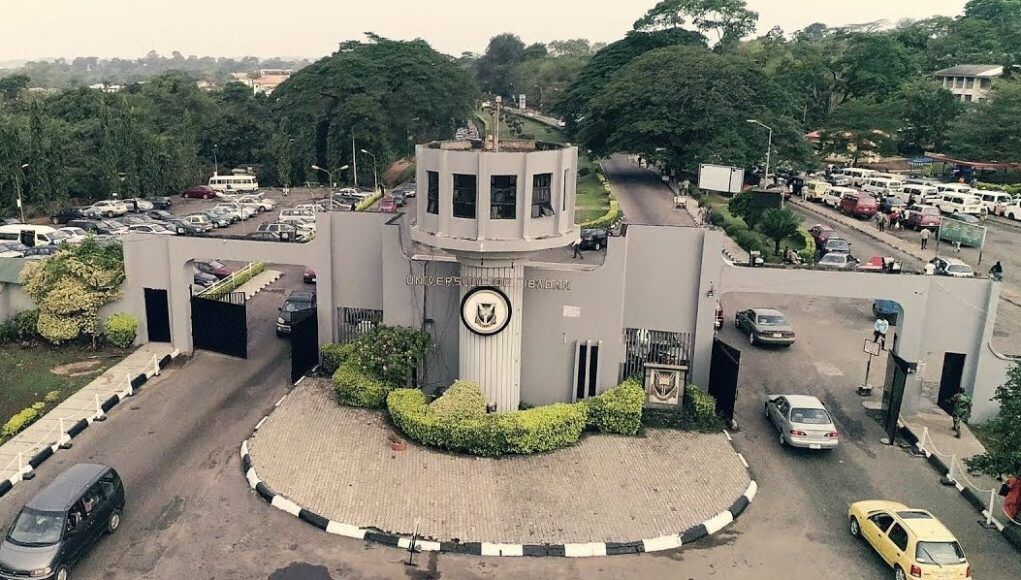
Founded in 1948, the University of Ibadan has long been regarded as Nigeria’s academic crown jewel. This statement, while once indisputable, now invites debate. Known as the first university in Nigeria and often hailed as “the first and the best,” UI has a legacy steeped in excellence, scholarship, and national pride. But decades after its glorious beginnings, a pressing question emerges among students, alumni, education observers and even Nigerians alike: UI is indeed the first but is it still the best?
The University of Ibadan’s place in Nigeria’s academic history is unquestionable. Established as a college under the University of London, it was the first higher institution to offer full degrees in Nigeria. Over the decades, it produced pioneering alumni like Nobel Laureate Wole Soyinka, literary icon Chinua Achebe, Africa’s first female vice-chancellor Grace Alele-Williams, current vice president of Nigeria Kashim Shettima, and countless others who shaped Nigeria’s intellectual, political, and cultural identity.
The university’s motto, “Recte Sapere Fons” (To think straight is the fount of knowledge), captured the spirit of critical inquiry that once defined the University of Ibadan experience. It was the benchmark for academic excellence, the model other institutions aspired to emulate until a comprehensive ranking list published by the Times Higher Education revealed the university of Ibadan to be fourth on the list of universities in Nigeria after thorough evaluation that looks at key areas such as teaching quality, research excellence, industry partnerships, and international outlook.
Once celebrated as the top university in Nigeria, the University of Ibadan UI has recently lost its number-one spot in the national rankings. This shift has sparked discussions about the factors contributing to the decline, including underfunding, infrastructural decay, administrative challenges, and a drop in research output. While UI still maintains a strong academic reputation, other institutions are rapidly rising by investing in innovation, digital learning, and global partnerships. https://allafrica.com/stories/202410100064.html?utm
In the 2024 rankings last year, two Nigerian universities -Covenant University, Ogun State and the University of Ibadan made the top 1,000 spot. The year before in 2023, three universities -University of Ibadan (UI), University of Lagos (UNILAG) and Covenant University were in the top 1,000 spots. Despite the challenges, UI continues to stand tall in several areas. It is consistently ranked among the top universities in West Africa and maintains a strong reputation in fields like medicine, literature, public health, and the humanities. The quality of academic staff and the resilience of its students have kept the university relevant, even amid Nigeria’s chaotic education sector.
Research output, especially in postgraduate disciplines, also remains significant, with UI serving as a hub for conferences, scholarly work, and international academic collaborations. The intellectual culture on campus from debates at the Students’ Union Building and poetry readings in the Faculty of Arts to state, zonal and national competitions remains vibrant and distinct with multiple wins and prizes.
Yet, beneath the surface, cracks are hard to ignore. The infrastructure, once considered state-of-the-art, is now mostly in decay. Hostels are poorly maintained and a luxury to get for staylites. Lecture halls are either too under-equipped, or in desperate need of renovation. Power and water supply remain unstable in many halls of residence. For many fresh students, the living conditions are far from ideal and what one might expect from the “best” university in Nigeria.
The administrative bottlenecks are another sore point. From increasing the school fees amidst students’ cries and protests, to inexcusable payments to acquire transcripts, UI’s bureaucracy often frustrates even the most patient students. Strikes, whether from the Academic Staff Union of Universities (ASUU) or non-academic unions frequently disrupt academic calendars, causing students to spend more years in school than necessary.
Curriculum-wise, some departments struggle with outdated course content that does not reflect current industry standards or market demands and yet pay exorbitant fees to maintain nonexistent laboratories. This disconnect leaves students academically informed but practically unprepared.
To be fair, the University of Ibadan’s struggles are not entirely self-inflicted. They are symptoms of a larger national problem: chronic underfunding of education, policy inconsistency, and a government that often treats higher education as an afterthought. Many federal universities face the same issues UI grapples with, but UI, because of its status, often bears the brunt of public expectations. Meanwhile, private universities are rapidly catching up in terms of facilities, exposure, and global collaborations even if they lack University of Ibadan’s historic weight. The gap between legacy and lived reality continues to widen.
So, is UI still the best?
In history and prestige, perhaps yes. In lived student experience, infrastructure, and innovation, the answer is more complicated. The University of Ibadan is still a symbol of what Nigerian higher education can be, but it cannot rely on legacy alone. Excellence must be constantly nurtured, not merely inherited.
To truly remain “the best,” UI must modernize its systems, invest in its people, embrace innovation, and prioritize student welfare. It must be supported by government funding, alumni involvement, and active student voices to rise once again, not just as the first, but as the best in every sense of the word.
 NASELS Press University of Ibadan
Leave a comment