
Adegoke Suliat Bamidele
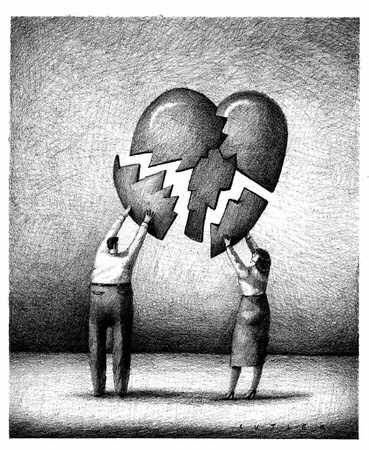
The image of Nigerian men has become a central theme in the publishing sector of late. It is a reason for which one would wonder if the only thing Nigerian men are good at is breaking Nigerian women’s hearts, who am I kidding, even the non-Nigerians. There appears to be a trend among Modern novelists to scapegoat Nigerian men as if these gentlemen were the cause of the Nation’s woes. Don’t get me wrong. These writers in recent years have shown their dexterity in the creative scene by portraying Nigerian men in different improper and discrediting circumstances. They are portrayed as the crafty, mischievous, and cunning character of Ìjàpá, ọkọ Yáníbo. Ìjàpá, in African traditional folktales, is infamously known as a trickster, who often plays tricks on other characters, using his wit to outsmart them. While this issue is addressed in Nearly All the Men in Nigeria Are Mad, Nigerian men will stain your white, and The Middle Daughter by Chika Unigwe, the depiction of Nigerian men as tricksters can be said to be adequately justified.
In Nigerian Men will Stain your White by Alexandria Humphrey, the novel delves into the world of the Nigerian dating scene, offering a glimpse into the lives of several women and their experiences with Nigerian men. The writer weaves Nigerian men’s mischievousness and promiscuity around characters like Bola, Efua, Kemi, and even Rita’s affairs. Efua, the main character, is a Ghanaian lady and a psychologist who is married to her seemingly perfect gentleman, a Nigerian Doctor, Femi. With her group of friends, they hold weekly dinners to discuss relationship issues that affect them.
The red herring in the novel is the thought which the writer creates in the mind of the readers that Efua has the perfect marriage out of the group. Even the rest of the ladies believe so and would constantly tease her about it. It turns out in the end that Efua’s marriage is not at all perfect but one layered with lies and betrayal, one wrapped in the pretence of love, commitment and acts of service. Who would have thought that Femi’s constant attention to detail, the romance, and the gifts were all facades? Nothing in his acts could have easily given him away. In the end, Efua not only finds out about her husband cheating but also discovers he is gay. Likewise, Femi not only stained Efua’s reputation but also wrecked it. Who else could be that crafty, if not Ìjàpá? Aside from Efua, the girls also had their fair share of Nigerian Men’s mischievousness. Rita broke up with her boyfriend because he tries to live off her generosity, Bola finds out that her crush David is not only married, but also sponsored by his wife, and Kemi is appalled by the audacity and misogynistic behaviour of the man her parents are trying to get her married to. In all of these scenes, nothing is saved of the Nigerian men’s image.
In The Middle Daughter by Chika Unigwe, the writer, through the characters of Nani and Ephraim, reveals the exploitative nature of Nigerian men. (Although Ephraim is not a Nigerian but has lived there for a considerable number of years, that can pass, right?). These men will ploy on one’s vulnerability to get what they want. In this case, Ephraim uses his religion, copious brain, sugar eyes, temerity, and rigged accent to cower Nani into rape and subsequently into marriage. He allows her to gain his trust only to upend her life.
In all Nigerian secondary schools, there is always the SS3 set, which is the worst since the inception of the school—this is a popular assertion by teachers and principals. In the Nigerian publishing sector, Nigerian men are the worst SS3 students since the inception of humanhood. Who forces his wife to sleep with another man for money but treats her like a leper when she returns? Nigerian men! Luqman, a Nigerian man in Nearly all the Men in Lagos are mad by Damilare Kuku, is presented doing this to his wife, Ehi. In this novel, the writer shows how these men move with audacity, these guys have audacity for days and a Black Friday sale on ego.
Here’s an excerpt on how Nigerian men are portrayed: “..Nearly all of them are mad. Awon were! The standard Lagos man package comes with lying, cheating, and occasional scamming, alongside stylish kaftans, splashes of sauvage or ouds and fake accents.” Shike, having encountered many shenanigans of Nigerian men, decides to venture into international relations, and she decides to get herself an Oyinbo man. But, in the end, she discovers there is a peculiar madness that possesses men as soon as they get into Nigeria.
Which brings about the question: “Are these all about Nigerian men?” Literature is a representation of reality, but in reality, do these things happen or are they just fictional? Are Nigerian men truly as tricky and crafty as literature portrays them, or is it just a reflection of societal biases? Who will redefine the narrative of Nigerian men in literature: the writers, the readers, or the men themselves? Can one conclude that the journey to understanding Nigerian Men through literature is a complex one, marked by stereotypes and biases?
 NASELS Press University of Ibadan
Leave a comment