
Esther Ogunleye
Sports and recreation are an integral part of the human history, from the ancient Olympics to the Kentucky Derby, Jackie Robinson, Negro League Baseball, the Super Bowl and more. Prior to 1870, activities for women were recreational rather than sport-specific in nature. They were noncompetitive, informal and rule-less. They emphasised physical activity rather than competition.
However, in the late 1800’s and early 1900’s, women began to form clubs that were more athletic in nature as tennis, croquet, bowling, and archery became popular in clubs from New York to New Orleans. Many men’s clubs allowed women to become associates and to participate in separate activities, though without according them full status. Efforts to limit women’s sport activity continued as they became more involved in competitive sports, and despite recent progress, discrimination based on the real or perceived sexual orientation and gender identity of female athletes persists. Women in sports may experience bullying, social isolation, negative performance evaluations, or the loss of their starting position.
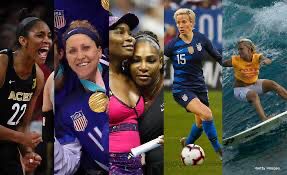
In recent decades, women athletes have increasingly become household names. From Serena Williams in tennis to Simone Biles in gymnastics and Sha’Carri Richardson in track, their dominance and charisma have transcended sports, earning them a place in mainstream culture. Events like the FIFA Women’s World Cup and the Olympics have showcased the immense talent and determination of these female athletes, drawing record-breaking titles.
The 21st century has been a transformative era for women in sports, marked by unprecedented achievements, shattered stereotypes, and a global push for gender equity. Across disciplines and cultures, women athletes are claiming their rightful place in arenas historically dominated by men, redefining what is possible and inspiring generations.
Despite remarkable progress, it is important to note that sports have long mirrored society, and the gender pay gap has persisted in athletics just as it has in the professional realm. For example in 2023, the Women’s World Cup awarded $150 million in prize money, which was only about a third of the $440 million awarded to men in the 2022 World Cup. And in sport, just as in the society, women are fighting back, working towards the day when pay equality is achieved. The events of the century not only highlights the skill and athleticism of women players but also amplifies conversations around pay equity and investment in women’s sports.
Moreover, women athletes are constantly objectified, with more emphasis placed on how the female body looks, not achievements or abilities, ultimately degrading the athlete. A common example is Luis Rubiales, former Head of Spain’s football federation and vice-president of the Union of European Football Associations (UEFA) who kissed Jenni Hermoso, a member of the Spanish women’s national football team, on the lips during the World Cup trophy presentation ceremony in August 2023. While this act sparked outrage and the coach subsequently resigned, there have been countless other instances of women athlete abuse.
Although the participation rates for women and girls in sports still lag behind their male counterparts in many regions, often due to cultural barriers, lack of facilities, or societal expectations, women including Simon Biles, Tobi Amusan, Serena Williams, Sha’carri Richardson, Shericka Jackson and Asisat Oshoala are athletes from all walks of life participating in various sports events, making history and writing their names in the sands of time.
Remarkably, the rise of professional leagues exclusively for women, such as the Women’s National Basketball Association and the Women’s Super League in soccer, have provided female athletes with platforms to showcase their talents and build sustainable careers and the most defining feature of this century is the increasing representation of women in sports, both as players and in leadership roles.
The future of women in sports looks promising. With increasing global recognition, growing sponsorship opportunities, and shifting societal attitudes, the stage is set for women to continue breaking barriers. However, achieving true equity and equality will require sustained efforts from every level, including policymakers and sponsors to fans and athletes themselves.
Additionally, there is still a need for more investment in grassroot development programmes to nurture young emerging female talents and provide them with resources, training, and opportunities to excel. The 21st century has not just been a turning point for women in sports, it has been a powerful statement of resilience, ambition, and progress. As more doors open, the legacy of this era will inspire countless women and girls to step into the arena and make history.
 NASELS Press University of Ibadan
Leave a comment