Deborah Olabode
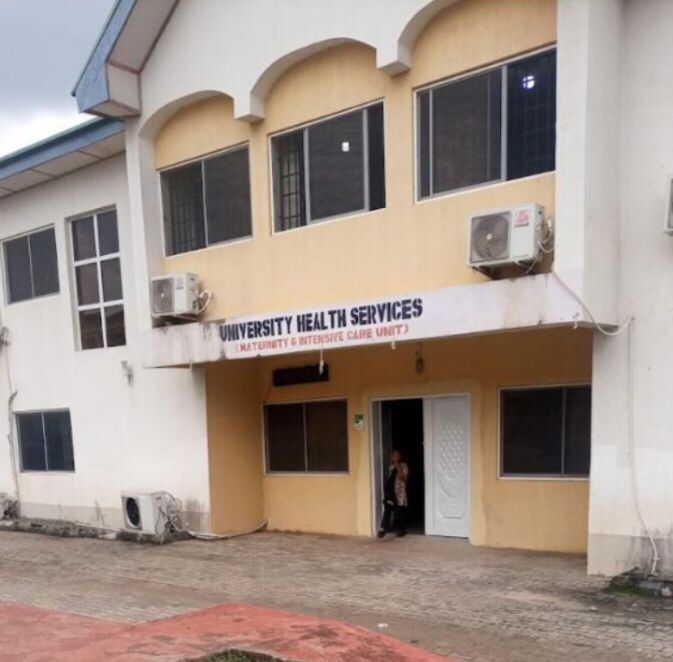
The University Health Services (UHS), affectionately known as Jaja, is located in the heart of the University of Ibadan. This hospital, designed to cater to the medical needs of students and staff, has earned quite a reputation for its nonchalant attitude towards patients. Students have shared experiences at Jaja, leaving many to wonder if the hospital is truly equipped to handle the needs of the school community.
For many students, a visit to Jaja is often a frustrating experience. Michael Olubode, an English student, recounted his experience at Jaja. “They did not attend to us for like two hours. I remember it was so exhausting that some of us left.” Michael also experienced a similar event when he took his roommate to Jaja. “The place was so disorganised. They said, “We have to do this in order to do that.” They were just directing us from this place to that place, from one doctor to another, and it was all getting too much.”
Moyosore, another student, shared her harrowing experience at Jaja. After suffering burns from hot oil, Moyosore rushed to Jaja, expecting prompt medical attention. Rather, she was not attended to right away. “I went there hoping to get relief as soon as possible. All they could say was, ‘Where is the burn? I cannot see anything. Just go and wait.’ I decided to leave after an hour because I thought maybe it was a minor injury after all, but when I got back to my hostel, I realised it had gotten worse with blisters on it.” she said.
A common thread runs through these experiences: a culture of nonchalance that pervades every level of Jaja’s operations. From the long wait times to the disorganisation and lack of empathy, it is clear that Jaja is failing in its duty to provide adequate medical care to the university community.
Damilola, a student of Botany, said, “I think short staffing is the issue. Can you believe I met five nurses in general and just one doctor? How quickly is the queue going to move if those that are going to attend to us aren’t much?” The shortage of medical personnel has resulted in an unbearable workload for the existing staff, making it almost difficult to attend fully to patients’ needs.
Another issue that may be surfacing in Jaja is inadequate infrastructure. The hospital’s facilities are insufficient, given the large population of students and staff it serves. A student observed, “The place is too small, too small compared to the population in UI. It’s just as if they exist just for existing sake. So annoying!” This lack of space and resources has resulted in a hospital that is ill-equipped to handle even the most basic medical emergencies.
Furthermore, Jaja has a profound impact on the thought patterns and actions of students, usually harmful. According to Bukola, a Botany student, “the best thing is not to fall sick at all. She added “If you know what is wrong with you, even though it is not medically advisable, kuku go out and buy what you want to buy. It will save you a lot of time. You will not miss classes without Jaja wahala.”
Michael and his roommate also had no choice but to go and buy drugs without a doctor’s prescription. “We actually went to get it without a prescription. They did not give us a prescription because they could not even attend to us. They did not even say it was malaria, but the guy has been having malaria and he knows how he feels when he has malaria. Although we really did not wait for them because he was in a very bad condition,” he revealed.
In conclusion, the University Health Services (UHS), popularly known as Jaja, is a hospital in crisis. Its culture of nonchalance, inadequate infrastructure, and shortage of medical personnel have resulted in a hospital that is not trusted to handle the medical needs of the university community. It is imperative that the university administration takes immediate action to address these issues, ensuring that Jaja is transformed into a hospital that truly prioritises the health and well-being of its patients.
 NASELS Press University of Ibadan
Leave a comment