
Esther Ogunleye
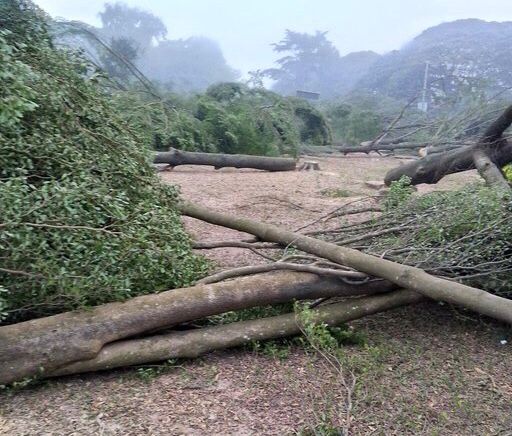
The University of Ibadan, often regarded as Nigeria’s premier and most prestigious institution, has long been celebrated for its lush campus scenery, a natural sanctuary that blends academia and nature perfectly. However, recent reports of extensive tree felling within the campus environment have provoked widespread alarm and sparked deep concerns, highlighting its implications, especially amid the global climate crisis.
The tree felling in Heritage Park is rumoured to have begun as part of a proposed infrastructure development plan and the construction of a new Senate building. However, many stakeholders, including students, staff, and environmental activists, question the necessity of such a move.This incident mirrors a global dilemma of how institutions plan to balance the urgent demands for development with the pressing need to protect our climate.
In reaction to the news on X, formerly known as Twitter, one student lamented, “These trees are not just part of the campus scenery; they are our heritage. Cutting them down feels like erasing a part of UI’s soul.”
Trees are among the most effective natural tools for mitigating climate change. They regulate temperature, prevent soil erosion, provide oxygen and provide resources and habitat for wildlife. Cutting down mature trees that have taken decades to grow undermines these ecological benefits, pushing the campus closer to the brink of environmental degradation.
In view of a warming planet, deforestation, even on a seemingly small scale contributes to the broader challenges of climate change. Each tree cut down reduces the university’s ability to combat heat waves, rising temperatures, and air pollution.
For decades, the park has been integral to the identity of the university. The lush surroundings offered a natural refuge, allowing students and staff to recharge amidst the hustle of academic life. Its trees provided shade against the heat of the sun and habitat for birds, insects, and small mammals, making the campus a biodiversity hotspot.
According to Population Matters, “Nigeria naturally has a large expanse of forests, with swamp and tropical forests in the southern parts of the country, and a wooded savannah in the middle belt. However, Nigeria’s forests are rapidly disappearing, with the highest rate of deforestation in the world, losing 3.7% of its forest cover every year.”
While the need for infrastructure is understandable, the question remains: should development come at the cost of environmental preservation? Experts argue that modern development practices should prioritize eco-friendly designs. For instance, building infrastructures around existing trees or blending green spaces into urban planning are feasible solutions.
Students, in particular, have expressed their dismay. In an interview with Atinuke, a 300 level student, “They gave us cleaner air, cooler surroundings, and a sense of connection to nature. Losing them feels like losing part of what makes UI unique.”
The recent felling of trees at the University of Ibadan by the management underscores a critical tension between progress and sustainability. As Nigeria grapples with the effects of climate change, actions like these remind us of the need to rethink development.
Despite Nigeria’s commitment to international climate agreements like the Paris Accord, local actions often contradict these pledges. Deforestation remains rampant across the country, driven by infrastructural developments, and urbanization. This not only worsens climate vulnerability but also endangers critical ecosystems, such as the Niger Delta.
The Green Growth Africa recently reacted to the trees felling in a post on X, “If this report is accurate, it is quite shameful that the University of Ibadan would demolish a notable green space in the university’s community and right in the middle of #COP29. As Nigeria’s premier citadel of learning, it ought to take the lead in climate action. And actions taken towards saving #greenspaces to mitigate climate change and safeguard our environments – and by extension our socio-economic prosperity; is the hall mark of responsible climate action.”
Civil society groups also argue that premier institutions like University of Ibadan, have a moral responsibility to champion sustainable practices. By failing to do so, they risk sending the wrong message about environmental stewardship. Preserving green spaces is not just an environmental obligation but a moral one. For a university as esteemed as UI, leading by example in the fight against climate change should be a priority, not an afterthought.

 NASELS Press University of Ibadan
Leave a comment