
Imisioluwa Bamidele
While many celebrate Christmas in December, for Emmanuel, Christmas was everyday because money was the least of his worries.
From gulping down varieties of juice to bonding with friends over food at the best eating outlets on campus, he was on the good side of life. Waking up at the wee hours to prepare meals ahead of the 7 am lectures had no foothold in the reality of Emmanuel because why beat himself over what money could solve?
But here was Emmanuel, in deep silence with long sighs, reflecting on how President Tinubu Ahmed had influenced not only his lifestyle but also everything about him.
Genesis of the Inflation
Before Bola Ahmed Tinubu was sworn in as President on May 29, 2023, people in the country were not forced into serious survival mode like we are today.
Addressing a packed crowd at Eagle Square in Abuja, he declared that “fuel subsidies are gone,” and the price of fuel skyrocketed from ₦185 to as high as ₦1200.
During the time of President Muhammadu Buhari, his predecessor, in April 2022, the Nigerian Senate approved a revised budget of ₦4 trillion to pay fuel subsidies for the year. Buhari stated that the increase in funding requested was due to the rise in oil prices caused by the Russia-Ukraine war.
Facts Don’t Lie
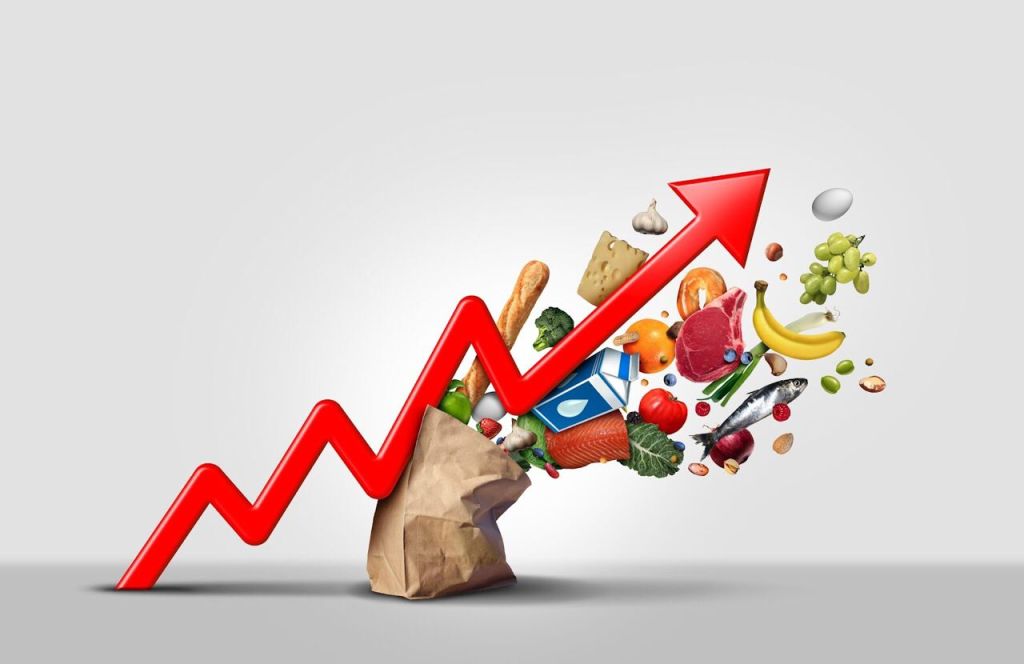
According to CBN records, the published inflation rate report was 22.22% for April 2023. It was 22.04% in March before Tinubu assumed office. In addition, the National Bureau of Statistics (NBS) reported that the inflation rate increased to 33.88 per cent in October 2024. It soared by 1.18 per cent from the 32.70 per cent recorded in September 2024.
The dwindling state of the Nigerian economy amidst hyperinflation has been a tough battle not only for Nigerians but Nigerian students. In an exclusive interview with NASELS Press, a few Nigerian students discuss their experiences and how they have fared.
Students’ Reactions
Emmanuel, a 400-level student in the Faculty of Arts, University of Ibadan, exclaimed that being a student at this time is “enthusiastically invigorating and abysmally frustrating at the same time.” He added that he makes ends meet from his side hustle. “I work; you know, I provide freelance services. I edit, I write, I teach, but most importantly, I depend on my parents for sustenance.”
Speaking on his finances, he said, “Financially, I am not in a good place, so yeah, I am still struggling financially.”
Regarding the impact of the economy on his finances, he stated, “It has had a significant impact on my lifestyle. It has taught me to be frugal. It has also taught me to think twice before I make any spending.” He added, “You know, it has impacted me both positively and negatively, and yes, it has impacted my lifestyle greatly.”
Ope, 400-Level Student, Communication and Language Arts
In the case of Ope, whose moniker is small but mighty, a final-year student of the Communications and Language Arts Department, he is raw with details and sugarcoats nothing.
Commenting on his studentship during the tenure of Tinubu, he exclaimed, “Of course, it is not easy stuff. Life is very tough being a student based on the current economy of this country. When you go to this store to buy something, they tell you it is more expensive. You go somewhere else, and they tell you the price has changed.”
He added, “Actually, being a student in this kind of scenario, what I do is calculate a lot before going to the market to buy anything.” On finances, Ope was vulnerable and transparent. “On that aspect of finances, it really affected me a lot considering the price hike in everything. You know the price of petroleum has really caused a lot of things.”
He added, “Before, I had a budget in which I spent monthly. You know, and out of this budget, you keep your pocket money, the one you save in case of unnecessary expenses that you may need.”
Commenting on how his finances took a dip, he exclaimed, “At this time, there is nothing really much about saving as part of my finances. The reason is we are after buying food. We are on the lookout for food. You just want to survive.”
He added “I won’t lie to you, I collected a student loan. The student loan is part of the things that really helped me pay my school fees.”
On the impact of the economy on his lifestyle, he revealed, “This economy really impacted my lifestyle, positively. You need to calculate, or else Brooklyn will visit you as a student. This economy really taught me how to live based on what you have and how to have plans for whatever thing you want to do.”
Favour Adediji, Biochemistry, University of Ilorin
In the case of Favour Adediji, a student at the University of Ilorin’s Department of Biochemistry, she exclaimed, “I feel like I am at a disadvantage because there are some students who enjoyed the privilege of previous presidents and had it easy.”
On how she has been navigating her finances, she revealed, “I am very big on trusting God, that’s just the first point I’d like to establish, and having faith that my needs are supplied according to the riches of His glory in Christ Jesus.”
She added, “I try to manage finances. I try to have a proper schedule of what I want the money coming in or money with me to be spent on. I try to be more prudent. I am into some digital skills that are helping me get a stipend to fend for myself, and these are some of the things I juggle together to stay afloat.”
Rating her finances, she said, “I have been so selfish with myself. This economy has made me so selfish. There are other things I have to do with money as a student and all. This economy has made me so selfish that I now have self-control.”
On how financially educated she is, she responded that “to an extent, I think so. I have watched myself, and I think I am not really swayed by things that are not of priority, so I feel like, to an extent, I have a good financial education, but there are some days I’d like to just take care of myself a bit.”
Reflecting on the impact of the economy on her lifestyle, she said, “I feel at this point, every money that comes into my hand just needs to be spent on something. I feel there is really no time for savings or something like that. It is not at a point where I’d really want it to be, but it’s still okay, and I am still learning to be prudent and everything.”
Adetutu, Distance Learning Centre, University of Ibadan
For Adetutu, a Distance Learning Student of the University of Ibadan, she commented “It is not really easy being a student in Tinubu’s era, especially being a self-sponsored student. The increase in the prices of everything is really draining, and it is not so encouraging.”
On survival, she revealed that she had “different side hustles aside from being a student; there are other activities I engage in that keep my finances going.”
Commenting on the impact of the economy on her lifestyle, she said, “This economy will teach you how to be financially wise. Yes, it has taught me how to improve my expenses as well as how to set priorities.”
Tobi, Psychology, Obafemi Awolowo University
Tobi, a student at Obafemi Awolowo University in Ile-Ife, revealed that being a student in these times is “very stressful,” as everyone (market women, transporters, lecturers, etc.) is looking for an opportunity to exploit you. It has always been that way, but due to the economic hardship, it has increased and it is more stressful.”
Commenting on how he has been able to stay afloat, he said, “Side hustle. I had to find a source of income besides my pocket money.”
On the impact of the economy on his lifestyle, he said, “It woke up the hustler spirit in me. I now need to get jobs and gigs more consciously. I don’t buy what I don’t need anymore. I don’t just buy things because I have to be more conscious of the fact that prices can suddenly increase and your budget might crawl. It is quite hard, but then it is well.”
Way Out
Nigeria’s economic crisis demands urgent attention, and several economic analysts have put forth valuable proposals to address the country’s persistent economic challenges.
Babatunde Adesokan, a finance professional in the corporate investment banking space, shared his insight with NASELS PRESS, highlighting the economic situation from two angles—food insecurity and anti-people economic policies. Addressing the issue, he said, “Generally, the challenges have to do with security. Insecurity affects all aspects of our lives. Agricultural produce has reduced because of insecurity.”
He added, “Another challenge is our economic policies causing galloping and high inflation. If these two fundamental issues are resolved, we’d be fine because every other amenity is picking up.”
Proposing a solution, he said, “How do we tackle food insecurity and harsh economic policies? We need drastic action because if we have harsh economic policies, they’d be felt by all households if it affects food prices. Now, food items and everything have been affected. Petroleum has been affected, and food prices likewise.”
“Government’s deliberate action on reducing food prices can be resolved by adopting all government agencies, especially all appendages of the government like NYSC and stuff. You redirect them into the Agricultural process, maybe all state governments should have farms and corpers posted should be going to the farm settlements,” he added.
Cementing his stance on the above, he added: “Each state will now have agricultural items that will be cheaper in the state. This can actually press down food prices in the state.”
On economic policies, he reiterated: “for economic policies to take effect and for people to be patient enough to see policies imparting, food insecurity must be addressed and when staple prices are not on the rise. It creates an aggregation of the micro economy that will keep growing for bigger picture i.e macro economics”. he concluded.
 NASELS Press University of Ibadan
Leave a comment