
Victor Siyanbola
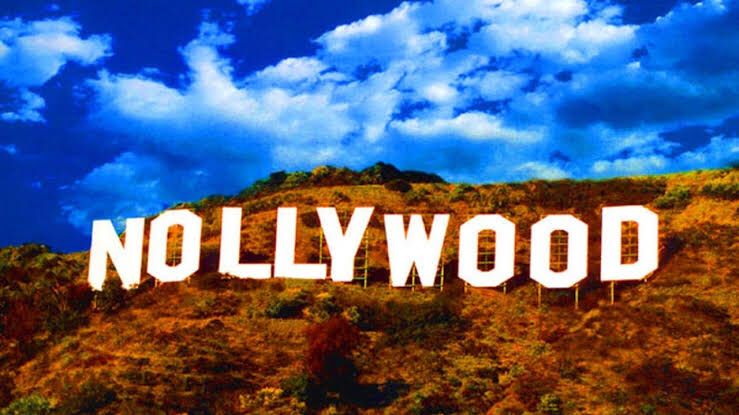
Nollywood is a constituent that is used as a sobriquet for the Nigerian film industry. The tree of this industry began to sprout in the 1960s when Nigeria gained her independence. Consequent upon this, film houses were constructed massively and more Nigerian local contents were curated. Ever since then, this tree has borne a myriad of fruits, depicting the ancestry of the Nigerian culture. It is, therefore, not gainsaying that Nollywood is huge both in its productivity prowess and accessibility.
It can be asserted that literature has a symbiotic relationship with society. This implies that one conception feeds on the other. No doubt, Nollywood has tried to visually represent the ills, weaknesses, strength and every atomic component of the nation through their numerous socio-historic artefacts. As a matter of fact, here in the African continent, the title of ‘’first among equals” is attributable to the Nigeria film industry. No wonder it tops the list as the second-largest film industry globally within the world of movie production.
Considered as the first generation of Nigerian filmmakers, the likes of Ola Balogun, Hebert Ogunde, Jan Adu, Moses Olayia and many others, depicted the historical tales of Nigeria. Prior to this time, Nigerians were keen on deriving entertainment in Hollywood. Their faces were, in those days, glued to their white-and-black televisions and their emotions were purged by the sight of the white man’s action. Children beckoned on their friends whose parents could not afford a TV. In the room, they probably totalled up to a quarter of those in the market square.
There was, basically, nothing to tell our history and the struggles of our heroes’ past—save the distorted stories which painted no serious images in the mind. For this reason, Ogunde and co. deemed it fit to contribute their quota to the creation of the Nigerian film industry. Hebert Ogunde himself spearheaded the establishment of the Ogunde Concert Party in 1945. History says it can be described as the first professional theatrical company in Nigeria. This tapestry of our heroes past, evidently, is not in vain even in this present day Nigeria. This is not far-fetched.
According to a report, the Nigerian film industry produces about 2,500 films each year. These curated films have contributed to the expansion of Nollywood both in the local and international maps. In the year 2024, the following plays have been released by the industry: Funmilayo Ransome Kuti, Momiwa, Oloture, Muri and Ko, Ajosepo, A father’s love, A Green Fever, Criminal, and the recently released House of Ga’a.
A review of the Nollywood Theatrical Scorecard posits that Nollywood premised the geometric upsurge of the West African Theatrical Subsector revenues as it boomed in 2023 to N2.6 billion, which is 24% higher than the sum of N2.1 billion recorded in 2022. The ever-energetic and enthusiastic fans of Nollywood who enjoy seeing the faces of Toyin Abraham, Funke Akindele, Kunle Remi, Genevieve Nnaji, Gabriel Afolayan, Bimbo Ademoye, et al. will agree that any toad-like film industry in Africa that desires the elephant-like size of Nollywood would only burst to death.
Across Africa, the uniqueness of African beauty, excellence, creativity/intention, and talent is deployed in through the prominent works of her various film industries. Africa’s film and audio-visual industry is endued with the potential of creating over 20 million jobs and generating US$20bn in revenues year in year out. As a consequence, this will contribute to the provision of more job opportunities, and help bolster the standard of living. Dr. Young-Tobi Ekechi of First Generation Mortgage Bank (FGMB) stated that: “The Nigerian film industry has grown to become the largest movie market in Africa in terms of value, the number of movies produced per year, revenue, popularity and job creation for actors, scriptwriters, production assistants and other individuals involved in the value chain.”
In spite of all these achievements, there is both a school of fish and a crocodile struggling for survival in the ocean. Challenges besieging the Nigerian industry are just as numerous as the glories in which she takes pleasure. These challenges vary with respect to finance, collaboration and execution of plans. They include a limited provision of infrastructure, shortage of funds, as well as hindrances against distribution which pose threats to the industry’s growth and prevents her from being a shining light. The Nigerian economy has affected several businesses especially Small-scale and Middle-scale businesses. A number of students have also relinquished their dreams to become educated. In the same vein, the hike in prices of commodities and other factors serve as tares among the wheat of Nollywood’s plantation.
 NASELS Press University of Ibadan
Leave a comment