Esther Ogunleye
An ideal student environment is one that is free from distractions, and healthy enough for everyone to participate fully in the learning while enjoying the learning process. It is not just about improving aesthetics, it is the responsibility of the school’s management to ensure that the student’s environment is a safe place.
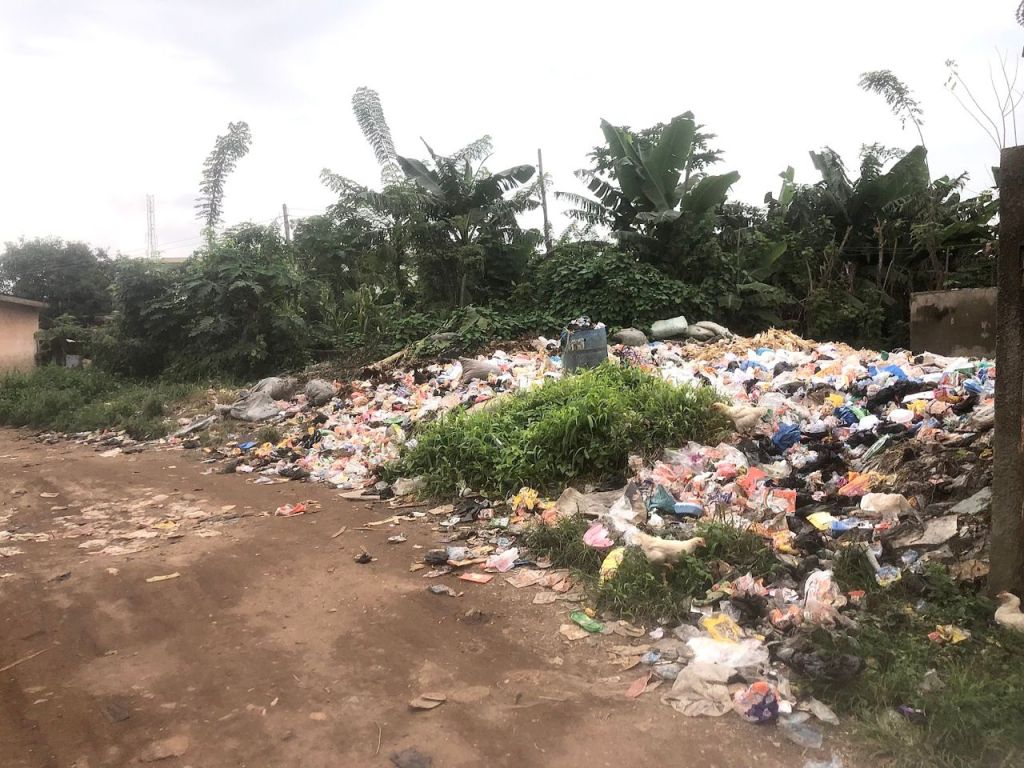
The Independence Hall’s bin site, located by the roadside opposite the famous Great Independence Hall, is not just a complete eyesore, it poses significant health risks to both students, staff and visitors. Adding to the fact that it has become a breeding ground for all kinds of rodents, flies and other vectors, it has now become a bad example of land and water pollution. Worst of all is its close proximity to students living in the environment. These waste includes organic materials, plastics, metals, and hazardous substances, all of which have and will continue to deteriorate over time and release harmful pollutants into the environment.
Probably because it is situated away from the public eye in one of the remote locations on campus, hence, it does not attract visitors as such. Unfortunately, neither the university management nor the Student Union are doing anything about carting away the tons of waste deposited on the bin grounds every day.
This unsightliness is a pressing issue of concern that requires immediate attention. The catastrophic health risks posed by such an open waste ground are too significant to ignore.
Speaking with the NASELS pressman in an interview, Mary, a concerned student residing in Iyalode Taofikat Hub who frequents the path said she had to purchase a nose mask to prevent inhaling the pungent odour emanating from the site. “The rainy weather doesn’t make it any better. In Fact, it’s worse now that there are potholes everywhere and we have to avoid both the bin and the potholes. I wish there could be a quick intervention from the university as it disfigures the whole place and constitutes a nuisance to the environment.”
In another interview with Favour, who journeys through the route to her hostel in Queen Idia hall, “I don’t think the place has been packed this semester. This is the rainy season and it reeks a lot. It’s spilling onto the road already making it even difficult for us to pass. Also, these animals go there and I’m sure they carry stuff like ticks from the dump to wherever they live. Plus, there are restaurants around here. Flies from the site can just go and perch on the food which is very hazardous to the health of students.”
In this case, water contamination is a serious issue. The waste ground, exposed to elements, can lead to the formation of leachate- a liquid that seeps through the waste and carries hazardous chemicals and bacteria. This leachate can infiltrate the hostel’s water supply, potentially causing gastrointestinal diseases among students. The fear of waterborne illnesses looms large, especially during the rainy season when contamination risks are higher and cholera cases is on the increase by the day.
In conclusion, these issues highlight the need for an urgent and comprehensive waste management strategies. Implementing regular waste removal, improving infrastructure, and raising awareness about the importance of hygiene are critical measures. It is vital for the school administration, The Students Union, and students themselves, and the wider community to collaborate in addressing these challenges. By doing so, they can create a safer, healthier environment conducive for learning and development. Ensuring the health and safety of all students and staff in the university must be a top priority, demanding prompt and sustained action.
 NASELS Press University of Ibadan
Leave a comment