Olumurewa Akande
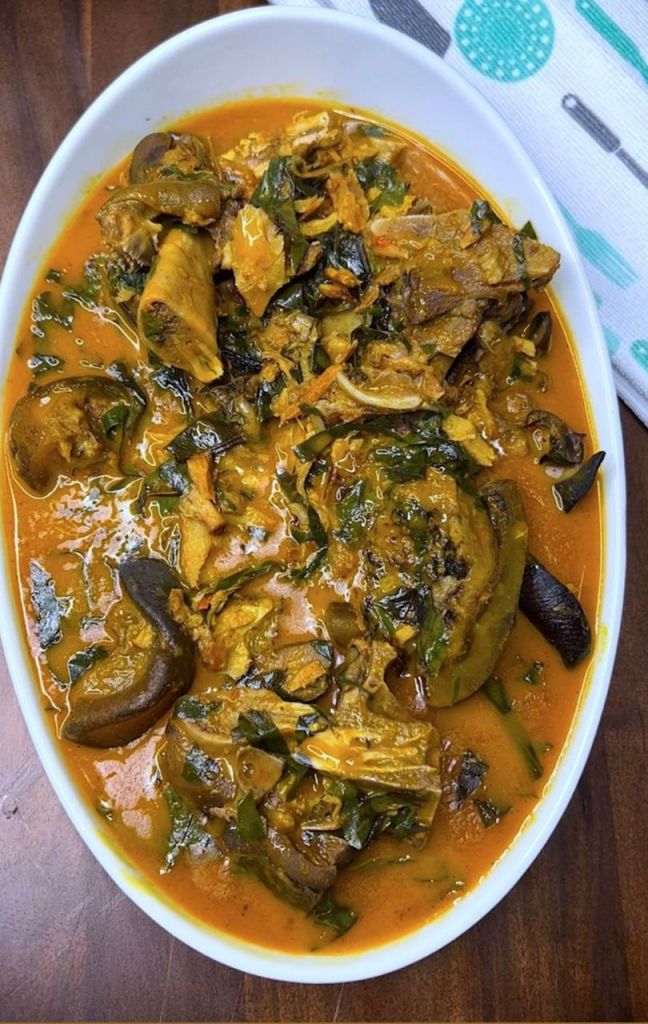
Edikaikong soup, a well-known vegetable soup, has its roots in the Calabar area, making it a beloved dish in Nigerian cuisine. This traditional soup is highly favoured for its rich flavours and nutritional value. It can be used to replace the regular vegetable soup we cook, known as Efo riro, and the famous draw soup (Okro). Some people feel like this vegetable soup is expensive and time-consuming because of how the Calabar natives cook it, adding various assortments ranging from stockfish to catfish and meat. But the beauty of this famous soup lies in the fact that you can make it your way based on your budget, and it would still come out delicious.
To make this soup, you will need some ingredients and condiments such as ugwu leaf, also known as the fluted pumpkin, meat, fish (optional), one cup of palm oil, one bulb of onions, condiments such as curry powder, one teaspoon of salt, and two seasoning cubes. It should be noted that these ingredients serve only two. Also, the cooking for this soup is typically around 30 minutes so it does not take a long time to prepare. So how do we start the process of making this soup?
Start by washing the ugwu leaves (fluted pumpkin) to wash away the dirt, but it is advisable to wash the ugwu leaves before slicing as rinsing after slicing may wash away the essential nutrients, so do well to rinse before slicing. Afterward, place them in a bowl and set aside. The next item to rinse is the meat and fish. Make sure to rinse the meat properly to remove impurities. If you prefer fish to meat or you choose to use both, it’s best to rinse the fish thoroughly, most importantly, remove the gills of the fish properly. For proper clarity on what you are cooking, set aside all rinsed meat, fish, and Ugwu leaf.
The next thing to observe is to place all condiments in a bowl, for instance, your seasoning cubes should be in a bowl the same as your curry, dry pepper, and salt. Also, one bulb of onions should be sliced into a bowl. Then you want to measure your one cup of palm oil aside and your sliced onions also. All the ingredients set in place, the next step is to put them on fire.
The first item to cook is the meat. Add a considerable amount of water to the cut meat, it should be noted that the water added should not be much as other liquid items like palm oil will still be added. After adding water, put your salt, curry, and seasoning cubes to your taste, not forgetting your sliced onions, stir well and leave it to cook for close to 10 minutes or when the meat is tender enough. For those who want to add fish to the soup, add the fish to the cooking meat a few minutes after the meat is placed on fire; this will prevent the fish from being overcooked.
Get ready to add your one cup of palm oil to the boiling meat. You can add more or less than one cup of palm oil depending on how much you love palm oil. Preferably, palm oil is actually required for the soup to come out well. And if you are not a fan of palm oil, you cannot use groundnut oil, do not even consider it because the soup will not come out well. That being understood, add your tablespoon of dry pepper and stir the mixture well. You can add a little water so that the soup would not be too thick, then let it steam up for about three to five minutes.
Next up is the sliced ‘Ugwu’ leaves( you can use other preferred vegetables like spinach or water leaves if you do not like Ugwu), add the leaves to the already forming soup, stir, then cook for close to five minutes in order for it to simmer. Also, you can choose to spice the soup up by adding crayfish, pomo, catfish and other assortments. Once you are sure that the soup is well cooked, have a taste, make sure that the ingredients are well distributed, if not, add more to your taste. Afterwards, take it off the stove and serve.
Voila, your Edikiakong soup is ready. It can be served with Eba, Fufu or any swallow depending on your choice.
 NASELS Press University of Ibadan
Leave a comment