
Rebecca Akinsola
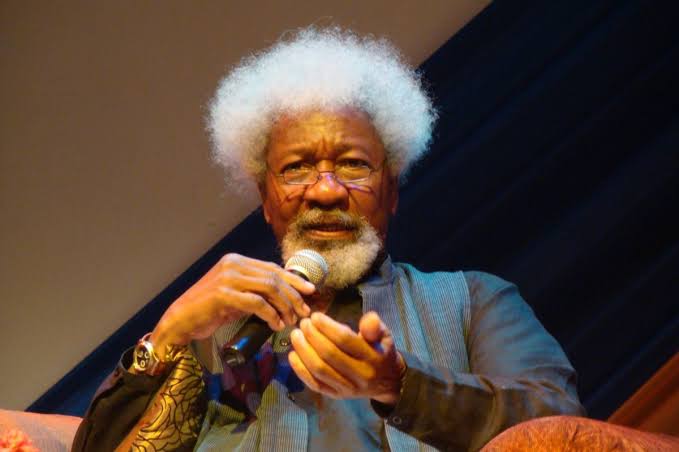
Many literary scholars have asserted that what William Shakespeare is to the Western world is what Wole Soyinka is to Africa; however, a number of people have also argued that both writers are not to be compared. To some people, Williams Shakespeare was an illiterate who was only good in his craft (writing plays) while Wole Soyinka is a learned man of letters whose literary works transcend generations while the reverse is the case for other people. Whether we agree or disagree with the assertion is not the reason for this discussion because both personalities are highly respected both among Africans and in the Western regions.
For our own Oluwole Babatunde Soyinka who was born in Abeokuta in 1934, the struggles of life would not be a total mirage because he was raised in a place you can call local in Nigeria. He grew and lived with his people. Little wonder he chose to become the man of the people who never got carried away with the Western fantasies and instead became an ardent preacher of the gospel, our indigenous cultures and literature. His father was a priest in the Anglican Church and the principal of a school. His mother owned a store and was active within the women’s liberation movement. His family belongs to the Yoruba people, whose culture has influenced Soyinka’s works.
Oluwole Soyinka had his tertiary education in the University of Ibadan where he bagged a Bachelor of Arts degree in English Literature and he further studied in the University of Leeds in England and then settled in London to work with the Royal Court Theatre. It was there that he wrote some of his early plays which were produced in Nigeria and London in theater and on radio. Soyinka is also known as a political activist par excellence as he played an active role in campaigning for the independence of Nigeria from the British colonial rule. Soyinka had been Professor of Comparative Literature (1975–1999) at Obafemi Awolowo University, then called the University of Ife, and in 1999, he was made professor emeritus. While in the United States, he taught at Cornell University as Goldwin Smith professor for African Studies and Theatre Arts from 1988 to 1991.
Soyinka lived his early life during the colonial era in Nigeria and as a political enthusiast. In his own words during an interview with The Nobel Prize, he described the then Nigerian society as “A society which was very deeply steeped in its own cultures. Those cultures were never eradicated by contact with the missionary society. It was also the birthplace of a lot of political agitation. While there was a pretty reasonable harmonious cohabitation with the Europeans, the British specifically, British colonial forces, there was also a very keen sense of nationalism.” He, therefore, stood to be part of the voice of the ardent natives of Africa whose goal was to restore the beauty of the indigenous cultural heritage.
Focusing more on Wole Soyinka’s literary prowess and achievement, Oluwole is a poet, playwright, essayist, and novelist; he also doubled as the first African and black man to receive the Nobel Prize in literature in 1986. His contribution to African literature is invaluable as he addresses contemporary issues in Africa in his writings. As a political activist, most of Soyinka’s works emphasize the need for good leadership in Africa. He has been a strong critic of successive Nigerian (and African at large) governments, especially the country’s many military dictators, as well as other political tyrannies. He continues to serve as a voice of caution to African leaders and his literary pieces remind posterity of the need to value and embrace our cultural heritage. Being politically inclined to his support for the blacks, especially the victims of apartheid, most of his literary pieces address the black fighter.
Wole Soyinka upholds the virtue of Africa and elevated Yoruba traditional gods and beliefs; he capitalizes on African religious mythology His African contemporaries, rely on African myths and traditions for the inspiration of his works. In his poem titled Ogun Abibiman where he excellently combined epic war poetry and praise song, he uses the life of Ogun to suit the interprete the events in South Africa during the apartheid regime. Also, Idanre, another of his poems, is interpreted to suit his immediate society hence, his use of imagery and symbolism are impeccable. Other dramas by Soyinka expertly combine Western elements with deeply religious and folkloric Yoruba subject matter and dramatic devices. The dramatic structure is rich because of symbolism, flashbacks, and clever plotting.
Despite being a learned fellow in English Literature, Soyinka believes that creativity is human-specific therefore he would not write according to any prescribed literary rule of acceptability. It is said that “he rejects literary ideology because its practical effects on the creative process lead to predictability, imaginative constraint, and thematic excision” (Studies in Poetry: 177). Soyinka further emphasizes on the import of imagination, inspiration, and spontaneity to produce a quintessential work of art.
In conclusion, Soyinka, having lived for nine decades, still stands out excellently in the literary and political sector globally and his contributions to the world of literature serve as a motivation for other indigenous literary works. Today, we celebrate greatness and simplicity personified in our Oluwole Soyinka.
 NASELS Press University of Ibadan
Leave a comment