
By Bamidele Imisioluwa
Like the popular adage “When it rains, it pours,” this goes beyond mere adage when it defines someone’s situation. Nigeria, as a metaphor for this saying, not only rains and pours consecutively but rains and pours simultaneously. It is no news that the lives of Nigerians have not remained the same since the inauguration of Asiwaju Bola Ahmed Tinubu as the President of the Federal Republic of Nigeria. It has been a season of increment in everything across all quarters, and the masses are not having it easy.
As the wind of inflation and suffering spreads across the country, all the citizens, regardless of one’s social class, feel the breeze. Lending credence to the Yoruba saying: “ara ò rọ okùn, ara ò rọ Adie” (neither the rope nor the hen is at ease). Everybody dances to the tune of the economy; even students, who are the supposed leaders of tomorrow, are also shown on the dance floor.
Speaking with Demilade, a 300-level student of the Department of English, his demeanor and composure portrayed that “not everybody feels the pangs of the economy.” Despite acknowledging the high cost of feeding, he does not see himself going in the red because he has a job that pays his bills. As a tech entrepreneur, he disclosed that his ability to support himself comes from “strict budgeting and having a financial portfolio for savings, investments, and utilities.”
Similarly, Arin, who gave herself a pseudonym, a 400-level student of the Department of English, said, “The rate of the hike in food commodities and other items was scary.” She cried out, saying that she was having trouble managing her finances because food was eating up her money.
Olamide, an 100-level European Studies student, was also likewise unconcerned about the harsh economic realities because, as a student entrepreneur, he maintained that the shoe business he had founded before being admitted paid for his expenses. He further stated that “although business prices gave him chills, it has helped him think outside the box on how to earn more.” According to him, “he doesn’t spend his time on reading books alone.” He acknowledged that he has an interest in Web 3. “Tech is the new oil money,” he added.
Ganiyu Aliyah, a 100-level student of European Studies, also shared her concerns about food inflation in Nigeria. According to her, feeding was no longer sustainable and was hurting meeting other needs. She disclosed that “she sells feminine accessories like beads and lip gloss, but the profit was meager.” She plans to transition into tech to increase her earning capacity. “Needs are limitless, hence money must be made,” she said in her conclusion.
Another student from the Department of English, who spoke on condition of anonymity, also shared her ordeal in the present economy. In addition to running a thrift store, she claimed to be a budding UX designer. She said that she didn’t have any issues with money as she had a family who supported her from time to time. She continued by saying that the state of the economy has taught her to be cautious. In her words, “I used to fry two to three eggs whenever I wanted to have bread, but now I can only fry one.” She continued, “This economy has taught me to prioritize wise spending.”
According to The National Bureau of Statistics, disclosed in its latest Consumer Price Index and Inflation report: “In May 2024, the headline inflation rate increased to 33.95% relative to the April 2024 headline inflation rate which was 33.69%. Looking at the movement, the May 2024 headline inflation rate showed an increase of 0.26% points when compared to the April 2024 headline inflation rate.
“On a year-over-year basis, the headline inflation rate was 11.54% higher than the rate recorded in May 2023 (22.41%). This shows that the headline inflation rate (year-on-year basis) increased in May 2024 when compared to the same month in the preceding year (i.e., May 2023).
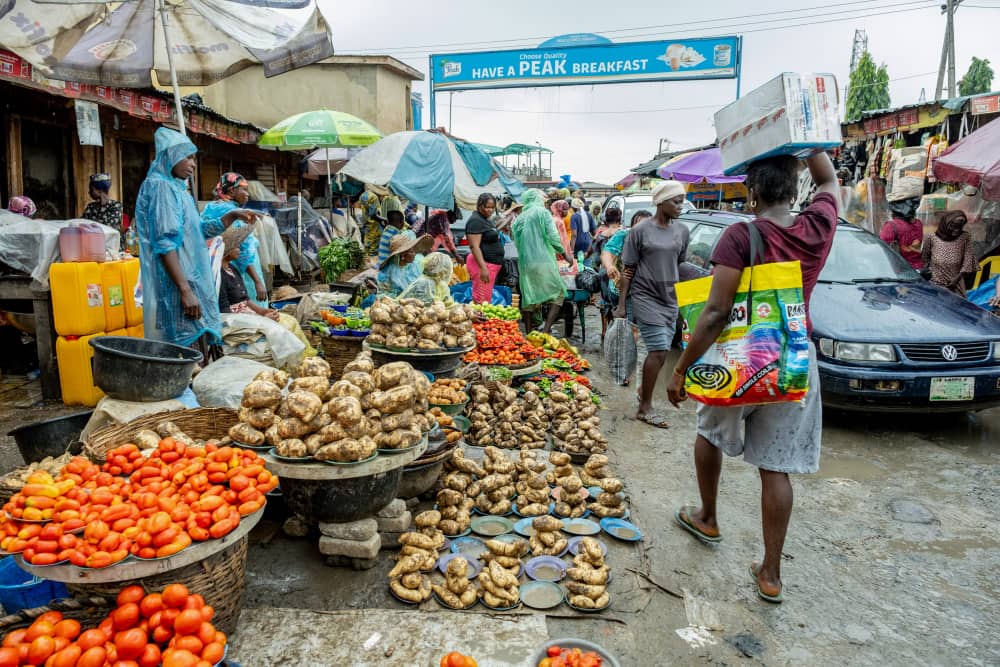
Furthermore, the National Bureau of Statistics stated that the rise in food inflation on a year-on-year basis was caused by increases in the prices of the following items: garri, millet, akpu uncooked fermented (which are classified as bread and cereals), yam tuber, water yam, dried sardine fish, dried mudfish (classified as fish), palm oil, vegetable oil, beef head, liver, among others.
 NASELS Press University of Ibadan
Leave a comment