Adebowale Amina
In this current fast-paced world of social media, communication happens in the blink of an eye. From Instagram to X (formerly twitter), WhatsApp and so on, platforms are buzzing with unique language styles, forms and modes, evolving all on their own as a result of interactions on a daily basis. In recent times, a peculiar kind of lingo style has sprung up across the internet in relation to social media, referred to as social media slang. Now, what exactly is social media slang, and why has it become so popular, and what are the possible effects of it popularity? Let us take a look into this as a subject of discussion and explore this evolving aspect of online communication.
Social media slang refers to a set of informal, often abbreviated words and phrases that are commonly used on social media platforms. These terms are designed to convey messages quickly and efficiently, often capturing emotions, reactions, or ideas in just a few characters. The rise of social media slang can be attributed to several factors. First, the character limits imposed by platforms like X, formerly Twitter, have overtime encouraged users to condense their thoughts into shorter, and punchier messages. This led to the proliferation of acronyms and abbreviations. Second, the need for quick and easy communication in this era of fast-paced digital interactions fueled the adoption of these slang terms. Also, memes, viral videos, and internet culture also contributed to the development of new slang terms that has quickly spread across social media platforms in the web space.
Social media slang is predominantly used by the younger generations, including students and young adults. However, people of all ages who are active on social media platforms may use these terms to varying extents. Some of the most common social media slang terms include LOL (Laughing Out Loud) which is used to indicate laughter, OMG (Oh My God): which expresses surprise or shock, BRB (Be Right Back): to indicate a temporary absence, DM (Direct Message) refers to a private message sent on social media and ICYMI (In Case You Missed It) is used to summarise or highlight important information, etc.
However, the influence social media slang has had on students’ and is still having on students’ writing skills and general life in itself, is a topic of debate. On one hand, using slang can facilitate quick and efficient communication in casual settings and informal meet-ups. It has proven to help students stay connected with their peers as they help in creating these various popular cultures. This language or communication style has also helped to foster a sense of belonging and shared understanding among members of communities across the webspace.People have been able to express themselves in creative ways and participate in conversations online more effectively. Slang usage has also played a significant role in shaping broader societal interactions, as two people of different language sophistication can possibly use this social media slang as a lingua franca. Interestingly, one aspect of social media slang is how it reflects current trends, attitudes, and social norms. Hence, this rapid evolution of slang terms has effectively mirrored the dynamic nature of digital culture, as new expressions emerge and spread rapidly across communities online.
Now, when it comes to students’ writing skills, the prevalence of social media slang presents seeming advantages and equal threats. So, having discussed the seeming advantages of social media slang in the previous paragraphs. Let us take a look at the side effects of and almost debilitating effect of this language and communication style/mode on students. The rise of social media slang, which can be traced back to the proliferation of the Short Message Service (SMS) usage, has led to a rising concern of it effects on formal writing in recent decades. The astronomical growth of the usage of social media has opened the doors for excessive usage of slang. These unwholesome developments have led to negative impacts on students’ ability to write formally and also articulate thoughts properly in an academic or professional setting. Students accustomed to the brevity and informality of social media lifestyle and language style without caution, have found themselves having quite a difficult time with spellings, grammar accuracy, and proper sentence structure when transitioning to academic (exams, essays and class activities) or professional situations demanding clarity and precision in communication. As a result of this, there has been a decline in spelling and grammatical proficiency, and even by consequential extension, pragmatics.
Further ways, social media platforms themselves, through algorithms, have contributed to the dissemination of slang are features like hashtags and trending topics. These tools have amplified the visibility and frequency of these popular slang terms, hence, accelerating their adoption among users of all ages. As a result, social media slang not only facilitates communication but also influences linguistic trends on a global scale, reflecting and shaping contemporary language use.
In all, social media slang is a dynamic and evolving aspect of online communication that plays a significant role in the lives of students and young adults. While it enhances digital interactions and fosters community, it’s important to strike a balance between using slang and maintaining strong writing skills. Understanding the role of social media slang empowers individuals to navigate the digital landscape effectively, balancing informal expression with the need for clarity and precision in communication. By fostering awareness and encouraging critical engagement with language use, educators and users alike can harness the benefits of social media slang while preserving the richness of formal language proficiency in academic, professional, and everyday contexts.
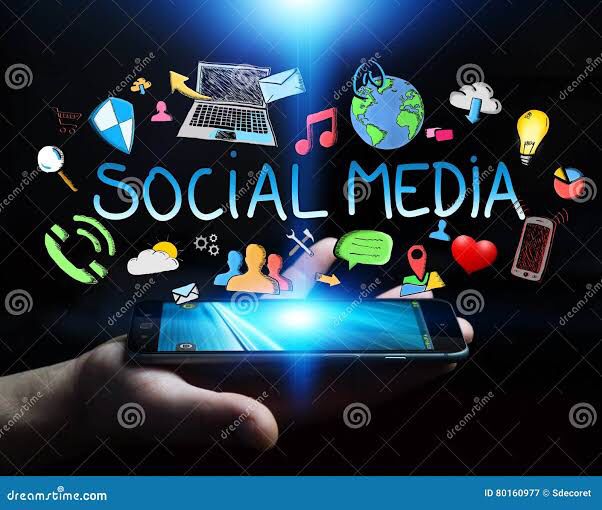
Photo credit: dreamstime.com
 NASELS Press University of Ibadan
Leave a comment