
Akinsola Rebecca
In our society where patriarchy and male dominance is the major determining factor in all spheres and walks of life, it is difficult to attribute some respect to the pioneering spirit of a few woman who have stood against the status quo to defend their rights and also to refute the claim that women are only good in the kitchen by birthing innovations and creative pieces that has changed the world and will continue to do so. Gender subjugation is not absent in the world of literature and among authors. It is vividly seen in how women are portrayed in their creative works. Even in the English society where documented and printed literature was established, women are portrayed as unique, witty, intelligent and tactful personalities who should be subject to the male genders. Literature was populated by the male gender, it was seen as “the man thing”. Drama, poems and prose writing were all written by ambitious men for the enjoyment of fellowmen and then women and children. In the Elizabethan age, women were not allowed to play a major role in the theatre. In fact, men took the female role on stage in the Shakespearian dramas. Until the 18th century when women began to show the world how creative and impactful they are with their literary bravura. Literature was fully attributed to the men. The immense contributions of women writers, such as; Charlotte Brontë, Emily Dickinson, Virginia Woolf, Jane Austen and others has reshaped and advanced English Literature tremendously.
Female authors in Africa have not just risen against the patriarchal status quo in their continent but they have also been able to gain national and international relevance. These women have been able to bring the world’s attention into the contemporary issues facing the society, how disadvantaged the women are in these societies and the need for women and children emancipation. Their writing becomes a tool useful for the implementation of social and cultural changes. African Literature has produced a limitless number of female authors who are not influential and popular but have impacted their lives with their works.
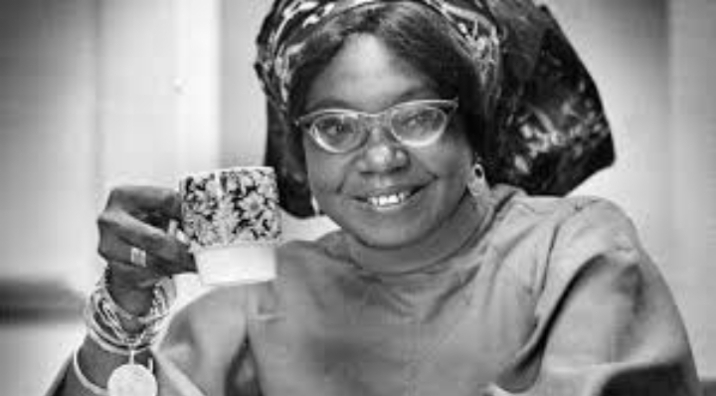
To begin with, Florence Nwanzuruahu Nkiru Nwapa (13 January 1931 – 16 October 1993), was a Nigerian author who has been called the mother of modern African Literature. She was an envoy and a model to a listless number of women authors in Africa. Flora considers herself a feminist and as one she published African literature and promoted women in African society. She was also responsible for reenacting Igbo women’s lives and rituals. She became one of the pioneering African women publishers when she established Tana Press in Nigeria in 1970. Flora’s first book “Efuru” was published in 1966. The transcript of the first was sent to Chinua Achebe who encouraged the young woman and also promised to fund the work. She wrote other books which are Women are Different (1986), Idu (1970), One is enough (1981) etc.
Mariama Ba is another phenomenal author in West Africa. She was born in Senegal in 1981; She was a prominent lawyer at the time when female education was less valued. Mariama is a feminist who believes and promotes the ideology in her works. In her prose work “So Long A Letter” which was first written in French before it was translated to English, she paints the mental picture of what unpleasant ordeal faced by married women face in their marriages and how they have to endure even to the point of them. It also details the struggles of being a woman in a religious society and details the sorrow and hardships women face. Mariama Ba’s work stands as one of the top books that relates to the suffering of the typical African woman and has been able to end women taking their stand to be happy even if divorce is the option.
Another notable women author in Nigeria is the renowned Buchi Emecheta who was in Lagos, Nigeria in 1944. Buchi in her early days worked as Librarian in Britain and also obtained a degree in Sociology from the University of London. Just like the aforementioned authors, Buchi’s works focus on gender, race and sex inequalities which were based on her own personal experiences. Her debut novel “In the Ditch” was published in 1972 as a series of articles in a magazine. Her second book, “The Second Class Citizen,” is also autobiographical and provides insight into the life of a poor Nigerian woman who finds it difficult to integrate into her community in one of the largest cities in Europe.
Drawing this article to a conclusion without mentioning another excellent African woman author, Chimamanda Adiche, will be a crime deserving a punishment. Chimamanda is another successful author who was born in 1977 and grew up as a bright child. She dropped out of the University of Nigeria where she was studying Medicine to pursue a career in writing. She later obtained a scholarship to study at Drexel University in America. Adiche published her first collection of poems and a play at age 21 in 1997. She identifies as a feminist and her work deals with the ordel and experiences of women in Africa. Her first novel, Purple Hibiscus was published in 2003 and was well received as is seen as a story that typifies it’s temporal and spatial setting. It thrives on themes which include family, religion, tolerance and politics.Adichie became well-known following the book’s release, and her handling of a sensitive and difficult topic like abuse and violence brought her multiple honours. Based on her parents’ experiences during the Nigerian Biafra war, her second book, Half of a Yellow Sun (2006), was written. The theme of war and its terrible effects dominates the book’s message. Majority of her novels got international recommendations and she won several awards. As a die hard feminist, Adiche also authored an essay which was adapted from a talk on feminism. The essay titled “We Should All Be Feminists” spurs the conversation on feminism worldwide. It discusses the different perspective to feminism and how women have been suppressed and made to live below men and this is not only a problem in Africa but also in the western world. Also as a full fledged Nigerian, Chimamanda recognises the culture and heritage of Nigeria and the Igbo cultural tradition in her books and this contributed in making her novels rich and excellently written. Till this day, Chimamanda still gains the world’s recognition and honour as a great novelist and an unapologetic feminist in a patriarchal state like Nigeria.
You would want to ask, are all women authors feminists? Of course not! Although most women take advantage of their writing to express their view about how women should be better treated, some other women writers in Africa focus more on issues affecting their environment and countries. Authors like Bessie Head (Botswana), Nadne Gordinne, Ama Ath Aidoo, Kaine Agary, Amar Dakko to mention a few address the problems affecting the common people in their environment. With this knowledge you’d agree with me that women are great contributors to the growth of literature and preservation of our heritage.
 NASELS Press University of Ibadan
Leave a comment