
Ita Lovina
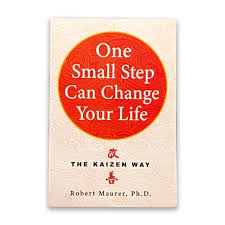
In his book, One small step can change your life, Robert Maurer introduces us to a Japanese method called the Kaizen method, a term meaning continuous improvement. The book tells us about the power of small actions. It emphasizes that even the smallest action can have a significant impact on our lives, taking small steps consistently can lead to big changes over time.
Carlos’ story in the book is a proof of how small changes can change your life. He is a man crippled by fear of public speaking but challenges himself by daily using the flinch technique (taking small steps at a time). He started by just looking at the door of the conference room, where he was supposed to deliver a speech, opened the door and took steps into the room. He was able to give his speech without fear.
Robert Maurer reminds us that big changes start with a small step and the flinch technique can be used to overcome any challenge we are facing in life. He encourages us to break down big goals into smaller manageable tasks which helps to reduce overwhelming and makes it easier to take action. Robert talks about a woman who wanted to lose weight but was overwhelmed by the idea of exercising for an hour every day. So she started by taking short walks around the block and slowly built up to longer walks and eventually started running.
Maurer explained his ideas in a way that is relatable, for example, he uses the story of Jane, a woman who wanted to eat healthier but found it difficult to resist temptation. Maurer suggests that Jane could start by adding one piece of fruit to her daily diet, one at a time. By taking small steps, Jane can make lasting changes to her eating habits.
The book also emphasizes the importance of taking responsibility for our own lives and not relying on others to make things happen for us. We have the power to create the life we desire through our actions.
One Small Step can change your life reminds us to trust the process and have faith in ourselves, by trusting that our small actions will lead to positive outcomes.
The key part of the Kaizen philosophy focuses on these:
s small questions
- Think small thoughts
- Take small steps
- Focus on small problems
- Appreciate small moments
As students, the first step in applying the Kaizen method is to ask small questions. For example, “How can I make my study session more effective”.Also, we should focus on small, specific thoughts, for example, rather than thinking about an entire textbook or course material, one can focus on a specific thought like “reading a chapter of the textbook for 25 minutes or more.
We should also appreciate small moments by recognizing and appreciating the small successes and improvement that we’ve made along the way. This helps to remain motivated and have a positive mindset.
We should also make time for assessing the set goal, to evaluate how we’ve made changes and how those changes are affecting our overall performance. We should also ask for feedback from peers or mentors, they can provide valuable insights for improvement.
Also, we should identify areas where improvement could be made and put them into practice.
Benefits of Kaizen method for students
- It helps to stay focused on our studies.
- It helps students to develop good habits. Such as, studying at regular intervals which helps students stay on track with their studies.
- It prevents us from feeling overwhelmed with projects and assignments.
- It helps us to track our progress and make changes when needed.
- It helps to manage our time effectively which can lead to better productivity.
The biggest strength of the book is its practicality, though the author provides easy steps that we can apply to a wide range of situations, how it works depends on how consistent and disciplined we are in following the steps.As students, by starting with small achievable goals, we build momentum and confidence.
As we see progress, we are more likely to stick with the changes we’ve made. Overtime, these small steps can lead to big changes which could increase our productivity as students.
 NASELS Press University of Ibadan
Leave a comment