
By: Praise Olorunfemi.
Although there are slight variations in the different descriptions of a library, and sometimes in other fields or aspects of endeavours, a library might mean something quite different from the conventional meaning. However, regardless of such fields or endeavours, there is still a common concept of what a library means. Now bringing it to the context that is being written about here, basically, a library is a place where books and other academic materials are being kept, so people can either have access to them for studies or even borrow them sometimes.
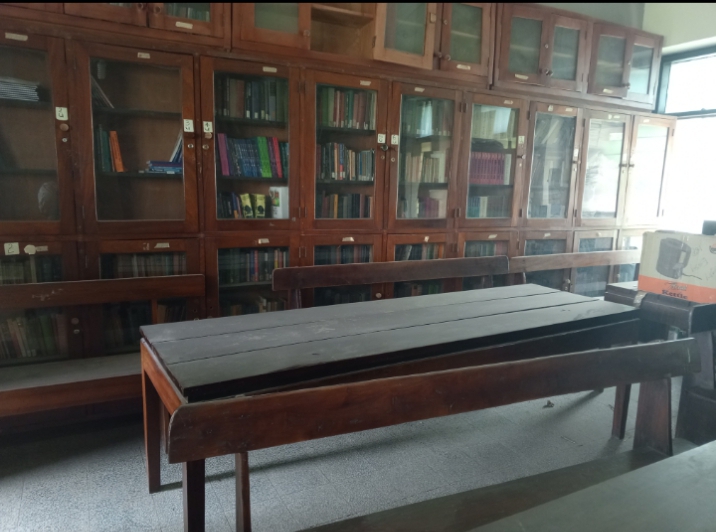
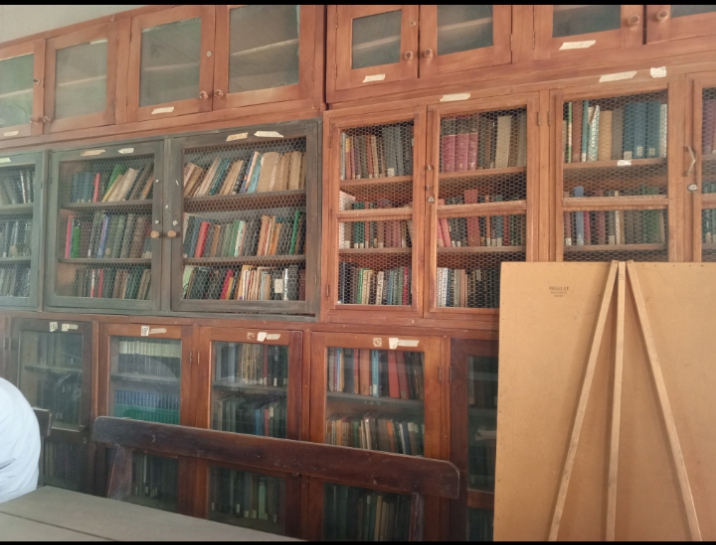
However, in the case of the Department of English, here at the University of Ibadan, there seems to be an irony surrounding the matters concerning the department’s library. It is one thing not to have a library at all in the first place, it is another thing to have a library which at best serves as a departmental store with bookshelves or, better still, “book-vaults”. A general conception you can always guess is always an underlying presumption in the mind of the public when they hear you are an English student. It is that by the time you are graduating after four years (plus x), you must have read nearly a hundred books. Well, much might not be “sayable” about English students from other Universities, but an English student in or from the University of Ibadan, Department of English, might either have hit that feat or close to that, or probably on that path. However, it might seem puzzling to an outsider to know that not a single page of material (not even a pamphlet) from the department’s library had any contribution to the feat of such students. Yet, you can be sure that the department will readily boast of such students when there is a chance to do so. Although the department’s library seems quite equipped with books, as a matter of fact, they are always on standby, readily displayed, but that’s the best of the purpose they are serving and the height of their destiny. There are always certain excuses why the books cannot leave their hallowed-chambered shelves. Hence, students of the Department of English can only, but, cast a futile gaze at these books, like a chicken in front of a bottled-up grain of corn.
One interesting thing is that most of the lecturers in the department have a notion of students being lazy towards reading. This notion to an extent is quite faulty, although, the majority of the students in the Department of English will readily feign being readers in any form or kind. Nevertheless, the reality is, they read indeed, and sometimes what they read are just not in the sphere of interest or familiarity whatsoever of what the lecturers read or judge as “a must-read”. For example, talking with a student in 300 level, it was discovered that he had over two hundred days of reading streaks reading popular literature and web novels. At some point, he stated that he had read all the books on display on a certain web novel platform (we are talking over 30 books). Another thing is this, some of the recommended books and suggested books to read in the courses students offer in the department, are very old and scarce books. Some of these books are very difficult to come by, and almost impossible for students to get them, as a result of either financial restraint, or the sheer fact that these materials are easily accessible by academics. For example, in a course titled Children Literature in the department, more than half of English students in the department who took the course eventually dropped it. Some did not even bother taking it again, as against their initial resolution, when they realised how difficult some recommended books were to come by. As a matter of fact, almost all the books initially quoted for each group work were quite difficult to get, and the ones that were got, were by the help of a lecturer. At the end of the day, on seeing that the feasibility of getting these books was slim, the lecturer had to find other alternate books, which were just at best just manageable.
Now, in light of the concern raised in the immediate previous paragraph, the library in the Department of English ought to be a model library for other departments. For a department that has been in existence since 1948 (well above 70), it should not be too much that they are looked up to as a model indeed, especially in the matters of running a functional library. Since the department knows what books are relevant for studies as recommended, and she can point to a library of her own, it should not be too much that the library be equipped with these materials at least to an extent, and access to be granted to these materials as well.Another thing that has been discovered about the Department of English Library is that students have almost no control over the library. Although the executive may term this situation as “co-controlled”, the practical reality is that they have almost no control over the library. For example, the Vice President says she has no control over enhancing the ambience of the library, which is another thing that needs to be looked into. Sometimes, a reading environment contributes to an effective reading. So, when the students do not even have control of the library, how then is the impact even supposed to be made in the first place? When one tries comparing certain active departmental libraries in the faculty to that of the Department of English, it will be discovered that most of these departments, such as Classics, have a larger aspect of the library being controlled by the students themselves. The student librarian of these departments have access to these libraries, and they are opened almost all the time.
Although the department might give the excuse of students mishandling the things in the library, or an abuse of the library. This now raises the question of how to prevent this. As a department, the department should be able to train students on the use of a library, either making it a compulsory course to be taken at 100 level or by creating a way in which every student must take such courses compulsorily. Furthermore, more detailed handbooks could be developed on the use of libraries and probably some further advanced studies on the use of libraries. With this, the department would have not only produced graduates in English but also graduates who are conscious users of any kind of library. If the Departments of Classics and Linguistics can have their libraries as active as it is, there is no reason why the Department Of English Library should not remain relevantly functional and accessible to NASLSites. A large portion of the control of the library should also be given to the students. With this, the constitution will be able to cater for matters concerning the library, hence, at any given time, someone can be held accountable for the library.
Conclusively, if it is just one department in the faculty that operates an active/accessible/functioning library, it would have been a case of a certain exceptional situation, and one might want to look into the feasibility of running a functional library. However, seeing the Departments of Classics, History, and Linguistics running an active, and equally accessible Departmental library, it is safe to say that the Departments of English have no tenable excuse for the library always being under lock and key like CBN’s vault. Sometimes, these departmental libraries, occasionally, do open on weekends, while that of linguistics is equipped with an alternative power supply, it remains open for night reading during exam periods. If the school system is meant to instil into students a certain level of advanced civility, locking facilities away from them will surely not lead to an automatic imbibing of this civility as a culture. The library should not remain perpetually locked, while fingers are pointed at the students for lacking a reading culture. Hence, the excuse of students mishandling the departmental library is far from being tenable.
 NASELS Press University of Ibadan
Leave a comment