
By: Siyanbola Victor.
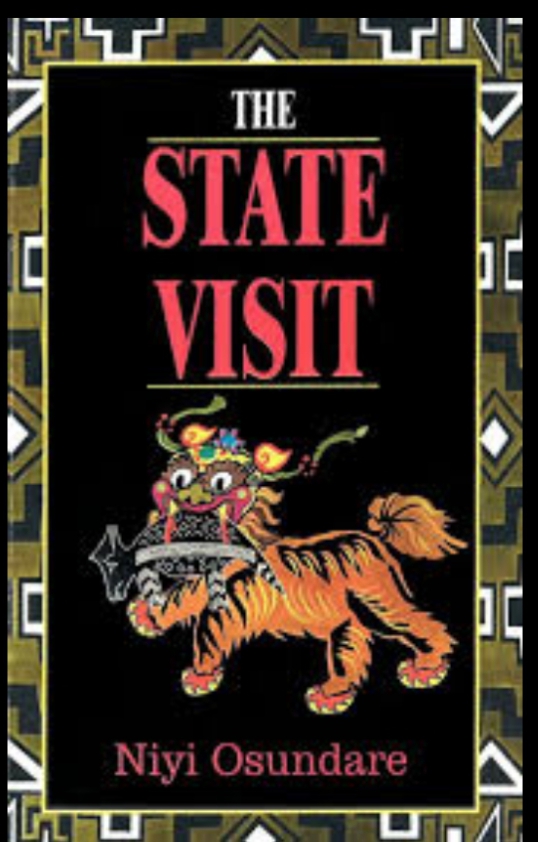
Drama as a genre of literature imitates life and human activities. It is meant to entertain, educate, enlighten, and reveal how humans live their lives, through the technique of mimesis. No doubt, The State Visit by the prolific and well-pronounced Nigerian playwright, Niyi Osundare, is shrouded in many of these features.
The State Visit is a social satire that addresses the malady of visionless leadership that has hitherto plagued the nations of Africa. It captures a fictitious African country called Yankeland. Metaphorically, this geographical location is said to represent Nigeria, the home country of the dramatist, or even Africa at large. It is around this setting that the events of this play chronologically unfold. All events are about the rallying round of the Yankeland people towards the visit of the leader of a neighboring country, Wilma. The play deeply criticizes the corruption, nepotism, authoritarianism, and leaders’ aggrandizement that are inherent in the African political system which consequently leads to the backwardness of African countries.
The play begins with a Narrator who appraises the audience of the event that will take place. Eventually, a cabinet meeting, chaired by the authoritarian Head of Yankeland, holds and its agenda is to discuss how to divert the 600 million naira maize fund of the national earnings to prepare for a state visit. They do this despite the famine, drought, economic instability, and other severe socioeconomic problems that marred the security framework of the country, leaving the citizenry as impecunious and hapless as possible. In the long run, this sparks a protest from the populace. The authoritarian regime attributed the demonstration as illegal and the police were used to disperse them. This spontaneous action leaves several people dead, without the exception of policemen.
Teeming with creativity and aesthetics, the play subsists in satire. The dramatist begins from scratch by revealing the bane of contemporary African leadership. He creatively exposes his perspectives on this menace by hiding under the narrator’s voice. Likewise, he uses the narrator to affect our attitude towards the play. The narrator voices: “… this land is rich in everything but the wealth is in the hands of few kings and queens. The only possession the people have in abundance is poverty.” (The State Visit:10″). This statement reflects humour, without a modicum of doubt, and serves as the foundation for the subject that the play is made to address. Thereafter, he mentions the ills and vices that blighted Yankeland: bribery and corruption, looting of public coffers for personal aggrandizement, unfilled promises, smuggling, hoarding, extortion, and so on. The strength of the leaders is drawn from looting the government treasury and violation of human rights. They make decisions that are insensitive, visionless, and precarious. By doing so, the masses are struggling to survive. As fictitiously depicted in Osundare’s Yankeland, so it is in the African continent. When they decide on how to take money from the government coffers during the cabinet meeting, the voice of the Finance minister stands out for justice. He tells the cabinet: “…you should be asking how much all together we have in the treasury. The decline in the production of cocoa, coffee, and tea has depleted our national earnings. Add to these the drought and famine of recent months… we are barely managing… (The State Visit: 14). Just like it resonates with the Nigerian/African system of politicking occurrences, this justice fighter suddenly turns an enemy. They plot how to assassinate him.
In addition, there are various literary devices deployed in the play. Characterisation is emphasized by the plot of the play. There is the representation of two classes of society: the powerful and the oppressed. All the events gear towards the Yankeland people preparing to receive Waliama and how this births protests and demonstrations. The portrayal of both classes brings to the fore the issues of visionless leadership (the cabinet meeting) and the call for resistance (the protest). Likewise, the language used by the dramatic is one of simplicity, easy and quick to understand. He deploys Nigerian proverbs that are rich in wisdom and cultural values.
In conclusion, a dramatist expects responses as they deliver to their audience through their works. This is what the international scholar seeks to achieve in The State Visit as he satirically makes refraction and reflection on the pressing issues existing in Africa about the leader and the leader. The dramatist uses this work as a vox populi, admonishing the people to resist bad government and oust them from office.
 NASELS Press University of Ibadan
Leave a comment