
Ibitunde Favour Anjolaoluwa
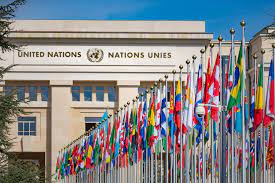
United Nations (UN) is an international organization, which was established on 24th October, 1945, after the end of World War II. The main aim for its establishment is to promote peace, security, and cooperation among member countries. The headquarters of United Nations is situated in New York City, United States. The organization consists of 193 member states, and each of the member state has a seat in the general assembly. There are five member countries with veto power; China, France, Russia, USA, and the United Kingdom of the Great Britain. The theme for the 75th anniversary of the organization which was celebrated few days ago is “Equality, Freedom and Justice for All”. This declaration, which consists of 30 articles, acts as a blueprint for the UN. This helped in initiating the ratification of a multitude of human right treaties globally.
The United Nations has different units to enhance the smooth running of the organization. The structure of the United Nations is as follows:
General Assembly: this body is the main deliberative body of the UN. Each member state has one vote. It discusses and makes recommendations on a wide range of issues, but its resolutions are not legally binding.
Security Council: this organ is responsible for maintaining international peace and security. It has 15 members, including 5 permanent members (China, France, Russia, the United Kingdom, and the United States) with veto power.
Secretariat: The administrative branch of the UN, headed by the Secretary-General. It supports the work of the other organs and implements their decisions.
International Court of Justice (ICJ): The principal judicial organ of the UN. It settles legal disputes between states and provides advisory opinions on legal questions referred to it by the General Assembly, Security Council, or other UN organs and specialized agencies.
Economic and Social Council (ECOSOC): Responsible for promoting international economic and social cooperation and development. It has 54 members elected by the General Assembly.
Trusteeship Council: It was established to oversee the administration of trust territories (colonies) and ensure that their inhabitants were prepared for self-government.
Secretariat: The administrative branch of the UN, headed by the Secretary-General. It supports the work of the other organs and implements their decisions.
Specialized Agencies: These are autonomous organizations working with the UN through negotiated agreements. They cover specific areas like health (WHO), education (UNESCO), labor (ILO), etc.
The UN system also includes various programs and funds, such as UNICEF, UNDP, and UNHCR, which carry out specific activities in areas like humanitarian aid, development, and refugee support.
This structure allows the UN to address a wide range of global issues, from peace and security to human rights, development, and environmental sustainability.
Since its establishment in 1945, the United Nations has been able to achieve the following:
1. Promotion of Peace and Security: The United Nations has played an important role in preventing conflicts and maintaining peace in various areas of the world. This was done through peacekeeping missions and diplomatic efforts.
2. Advancement of Human Rights: UN has been useful in promoting human rights globally, including the Universal Declaration of Human Rights, which sets out fundamental human rights.
3. Humanitarian Assistance: the United Nations provides humanitarian aid to millions of people affected by natural disasters, conflicts, and other emergencies around the world.
4. Promotion of Gender Equality: the UN empowers woman and girls around the world, through initiatives like UN women, which advocates for gender equality and women’s rights.
5. Global Health: the World Health Organization (WHO), a UN agency, works to fight diseases, improve healthcare system, and respond to global health emergencies.
6. Fostering International Cooperation; it provides a forum for member countries to collaborate on global issues and negotiate agreements through the General Assembly, Security Council, and various specialized agencies.
7. Arms Control And Disarmament: the UN works to prevent the proliferation of weapons of mass destruction and promote disarmament efforts.
8. Environmental Protection: The United Nations addresses environmental issues through agencies like the United Nations Environment Programme (UNEP) and by convening international conferences, likes the Paris Agreement on climate change.
Although, the United Nations has made important impacts, the organization has also faced challenges, and its effectiveness varies depending on the complexities of global politics and the cooperation of member states.
Human Rights Violations: It can be challenging to guarantee the defense and advancement of human rights in every member state, particularly when governments are unwilling to submit to international inspection.
Climate Change and Environmental Issues: Meeting sustainable development objectives and addressing global environmental difficulties continue to be major continuing concerns.
Crisis of Refugees and Migration: Controlling the flow of refugees and migrants presents difficult political and logistical problems, particularly in times of major crisis.
Terrorism and Extremism: The UN has had to strike a careful balance in order to combat terrorism while upholding human rights and national sovereignty.
Despite the challenges faced, the UN continues to work towards its mission of maintaining peace and security, promoting human rights, and fostering sustainable development.
 NASELS Press University of Ibadan
Leave a comment