Ogunleye Esther
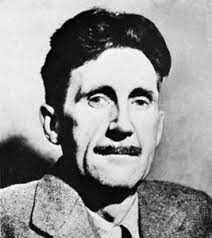
George Orwell wrote ‘‘1984’’ to teach people about the negative things that could happen if they allowed their government to exercise total control. The book centers on the consequences of totalitarianism, mass surveillance and repressive regimentation of people and behaviors within a society.
In the novel ‘‘1984’’, or ‘‘Nineteen Eighty-Four’’, George Orwell presents the idea that individual freedom had been completely suppressed. The message that the novel conveys to the reader is that such a world is possible, and that it is something that must be avoided at all costs.
The story of Winston in the novel is a proof of how the government can impact the lives of the masses. He recalls that when he was a child, the world was full of freedom and hope. But now, the world is a place of fear and oppression controlled by the all-seeing eyes of a totalitarian government.
Winston quotes, ”To the future or to the past, to a time when thought is free, when men are different from one another and do not live alone— to a time when truth exists and what is done cannot be undone.”
George Orwell in his book, also wrote,
“War is peace.
Freedom is slavery.
Ignorance is strength.”
These lines reflect the dystopian society’s use of contradicted slogans to control the thoughts and beliefs of its citizens.
Though the novel is considered controversial because it challenges the actions and ideologies of powerful governments, and explores the concept of truth manipulation and thought control, it passes a message of hope that even in the darkest of times, human beings are capable of courage and resistance.
“1984” by George Orwell is a haunting and thought-provoking novel that delves into the consequences of totalitarianism on individual freedom and thought. It tells the story of Winston Smith’s struggle against the oppressive Party in a dystopian society marked by censorship, surveillance, and the manipulation of truth. The novel serves as a powerful warning about the dangers of authoritarianism and the importance of preserving the freedom to think and speak the truth.
It covers various subject matters like the reign of Stalinism. Drawing parallels with the historical aspects of Stalinism and Nigeria as a case study, it is essential to understand that while Nigeria is a different country with distinct historical and political dynamics, there may be elements reminiscent of Stalinism in various contexts.
A prevalent instance is media control even in the digital age. Controlling the media and information flow has become a significant tool for governments. In Nigeria, there have been instances of government attempts to control the narrative and suppress independent journalism, which bears some resemblance to Stalinist control over information. Though Nigeria runs a “democratic” government, various features of totalitarianism, arrest and harassment of opposition voices, and suppression. While the causes may differ, the human suffering underscores the importance of addressing social and economic disparities.
These parallels, such as authoritarianism, media control, repression, and personality cults, serve as cautionary signs. It is essential to recognize and address these trends to safeguard democracy, human rights, and individual freedoms in the face of evolving political landscapes. By examining the shades of Stalinism in contemporary society, we can learn from history and strive for a more just and democratic future.
Overall, “1984” serves as a cautionary tale about the erosion of human rights and the dangers of authoritarianism. It encourages readers to remain vigilant in defending freedom, truth, and the integrity of language and information. It remains a timeless work that continues to provoke discussions about government control, surveillance, and the fragility of human liberties.
 NASELS Press University of Ibadan
Leave a comment