
Emeritus
Imagine that you went to a foreign country. You did not know their culture, nor could you speak their language. You saw them as your inferiors, not knowing that they had their origin and histories. Then, as an African, you stood at a river bank, and took nice pictures. You gave the river a name. You later called the media or you reported the events to them when you got home. You told them that the river was discovered by you. You did not realise that the indigenes must have given that river a name before.
You read the little imagination above, right? Okay. Very good. That is the semblable story behind all the supposedly discoveries of the Whites in the dark continent.
When you were young, you should have heard that Mr Something Something discovered something and something, etc. Simply put, we grew up to learn the cock and bull fairy tales the white told us.
For centuries, nobody challenged the Europeans. They told us their sides of the stories. We were also gullible. We swallowed their lies, like a fish, hook, line and sinker. They had come for economic adventurism and expansion. Later, they came to colonise us. In the Europeans’ accounts, we were crude, unlettered, uncreative, and barbaric. They tagged our continent unexplored. To them, we were like the bastard in the Yoruba’s proverbial axiom that uses left hand to point at his father’s house. They saw us as a people without origin, culture, and histories, most brutally, without functioning brains.
Did we have our stories, histories, cultures, socio-political life before the adventure of the Whites on our land? Of course we had it all. Then, why did the Europeans glorify themselves about the histories of Africans?
“There is that great proverb—that until the lions have their own historians, the history of the hunt will always glorify the hunter. That did not come to me until much later. Once I realized that, I had to be a writer. I had to be that historian. It’s not one man’s job. It’s not one person’s job. But it is something we have to do, so that the story of the hunt will also reflect the agony, the travail—the bravery, even, of the lions.”
— Chinua Achebe, interviewed by Jerome Brooks, The Paris Review, Winter 1994.
For many decades and a few centuries, the hunters, the Europeans, who had come to our land to explore our resources were the historians. They glorified themselves, ascribing every success in Africa to themselves. There were the one-sided historians and we were the lions that needed their own historians. I am sure that you would have heard about a hunter that used his cap to kill an elephant. Could the story be true? We don’t know. What the hunter told people was a one-sided story. To know the truth, the said elephant or others must have their own historians.
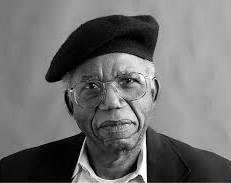
And yes, Achebe became the first. He became the first voice that gave others voices in Africa. The glory of the hunt had always been given to the Europeans until Achebe arose, and challenged the Whites’ inordinate domination, self-glorification and sanctimoniousness.
Albert Chinụalụmọgụ Achebe, popularly known as Chinua Achebe is the foremost Nigerian novelist. He wrote Things Fall Apart, 1958, No Longer At Ease, 1960, Arrow of God 1964, A Man of His People 1966, amidst others. His first and most popular book, Things Fall Apart, is the most prominent book ever written by an African. It has been translated to no fewer than 50 languages with more than 20 million copies sold globally.
Achebe’s first indelible impact on Afrocentrism is his rejection of his Christian name. Only a few people knew that he bore Alfred. He loved to identify with his people, culture and language, not Westernization. Without doubt, Achebe grew up at a period when many Africans, who were privileged to receive formal education, became westernised at their own volitions, and even berated the crudeness of African culture based on their jaundiced views. Nonetheless, he was sober enough to show his allegiance to the black continent.
Achebe, the father of Modern African Literature, used his first book Things Fall Apart to project the culture of his clans. All the characters, except the Christian missionaries, bear the indigenous names of Igbos. This, without mincing words, shows his total abhorrence of the Western culture in dominating Africa’s. He believed that Africans could globalise their cultures and languages in their writings.
To add a verisimilitude, Things Fall Apart‘s protagonist, Okonkwo’s, stubbornness to accept Christianity is a pointer of Achebe’s belief that the Africans ought to hold their religions and cultures without compromise. He uses the character as an opposition to westernisation. Okonkwo, in his character trait, shows strict adherence to his fondly way of life, and he is unrepentant about it despite the fact that he is a lone ranger.
Achebe’s No Longer At Ease’s main character is Obi Okonkwo. The main character in his Arrow of God is Ezeulu, while Chief Nanga is the main character in his A man of The Peoples. Without doubt, Achebe made Afrocentrism the centre of the characterizations in all his works. He globalised our traditions against the Europeans’ thoughts about us.
Since Achebe had the affront to project African cultures, other writers also found their voices. The likes of Kambili, Jaja and Aunty Ifeoma as Characters in Chimamanda Adichie’s Purple Hibiscus portrays the people’s indigenous cultures. Lakunle, Sidi, and Baroka in Wole Soyinka’s The Lion and The Jewel are embodiments of Afrocentric disposition of the black to prioritise their culture over the opinionated one. Writers like Asare Konadu, Kobina Sekyi, J. M. Coetzee, Ayi Kwei Armah, Mariama Ba, Ngũgĩ wa Thiong’o, and others are forces to be reckoned with in the showboat of African traditions in the global market of literature. However, all thanks to Chinua Achebe who, without having any predecessor that projected African cultures, made himself the first voice that marketed African histories and cultures. He is truly the father of Modern African Literature.
 NASELS Press University of Ibadan
Leave a comment