
It is nearly one month into the new year but the wave of unprecedented developments in the nation, and as propagated by the various mainstream media outlets, is a surprisingly robust one yet. The entertainment industry still has the country barely recuperating from the overnight departure of an ever-dominant Super Eagles from the African Cup of Nations. The political milieu is agog with sporadic declarations of candidacy by brimming young, new faces and – of course – some once-upon-a-time political office holders intent on ascending the political throne yet again. But a peculiarly striking development or (better put) – a peculiarly striking chain of occurrences – is that of the successive demise of certain monarchs and traditional stakeholders within the Yoruba subcommunity; a concatenation of ghastly events unexampled hitherto in Oduduwa history, and one puzzling enough to have the curious mind wonder as to whether these were purely happenstance or beyond merely coincidental.
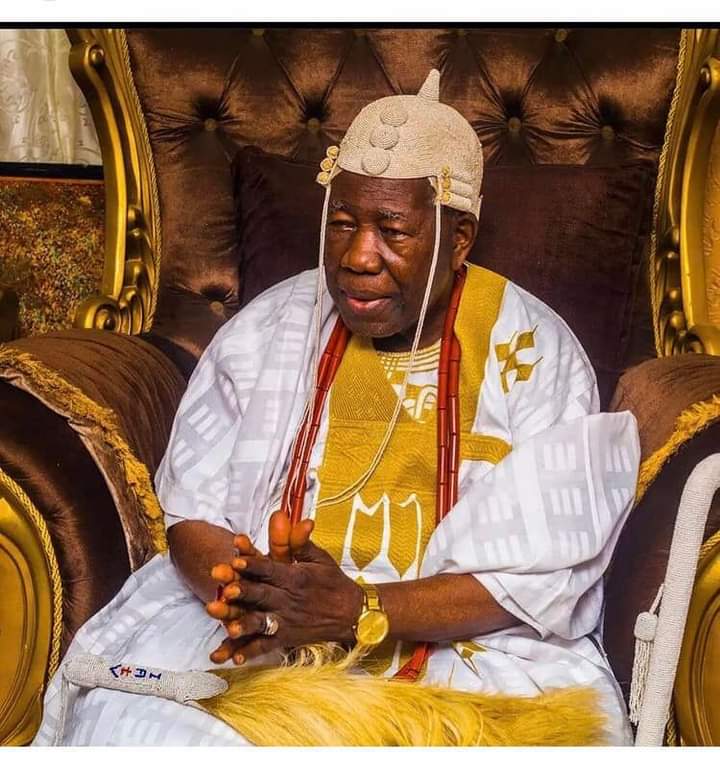
On the first day of the year, the world was knee-deep in festive stupor, and as the night wore away, it teetered on the brink of celebratory inebriation. A day after, it would awaken with a mild hangover that would, in turn, be aggravated by the news of the passage of Oba Saliu Adetunji, the Olubadan of Ibadan land, in the wee hours of Sunday, 2nd of January, 2022 at the University College Hospital (UCH).
The earthly departure of his Imperial Majesty was an especially shocking one as it was less than 48 hours into a new calendar year and, more so, his cessation of breath at a crucial moment in our political history signalled that the deathly catastrophe was anything but unsuspicious.
More mystifying about this curious tale was that less than a month before, another notable Yoruba monarch had died in a different part of the state. This, of course, was the late Soun of Ogbomoso land, the 95 years old Oba Jimoh Oyewumi Ajagungbade III, who passed on in a similar fashion at midnight albeit without any disclosed or purported issue of prior illness(es). The latter, it must be noted, lost one of his sons a few weeks before his death and another daughter posthumously.

The occurrences add on thicker layers of mystery and entanglement as the former governor of Oyo State, Otunba Alao Akala, who, admittedly, was the Bóbagúnwà of Ogbomoso (hence his inclusion into the circle of affected traditional stakeholders) also bade life farewell on the 12th of January – literally on the same date and exactly one month after his king’s demise in his hometown.
Observant members of the populace pinpointed and reiterated this last fact as symptomatic of a not-ordinary and transcendental affair orchestrated by God or man? No one could tell. Although hard-line critics have dismissed this as an unnecessary factoid, a piece of trivia that holds no water.
Four days to the end of the month, news circulated about the deposed Deji of Akure, Oba Adepoju Adesina who, like his counterparts, also died in the early hours of that ill-fated day. This was the last straw – at least, the last straw yet.
This whole unwieldy episode rouses a lot of disturbing questions with which there are little to no satisfactory answers. That the events were completely coincidental or orchestrated? That, if the latter, was it a man? – possibly an ambitious fellow next in line to rule? – or an augury from the gods? And the scary question: who is the next to die? (If there is a next, that is.) The deeper one probes, however, the wider the epistemological void. And this, perhaps, should incline us to consign these questions to the tons of unanswered and unanswerable queries in the universe.
It is perhaps time to shift our gaze from this cataclysmic past while we hope for the longevity as well as the preservation of both ourselves and our rulers (the good ones, of course) and the stability of the recently upturned power. The recurring deaths of traditional rulers; a mere coincidence or the gods are just angry? I do not know.
 NASELS Press University of Ibadan
Leave a comment